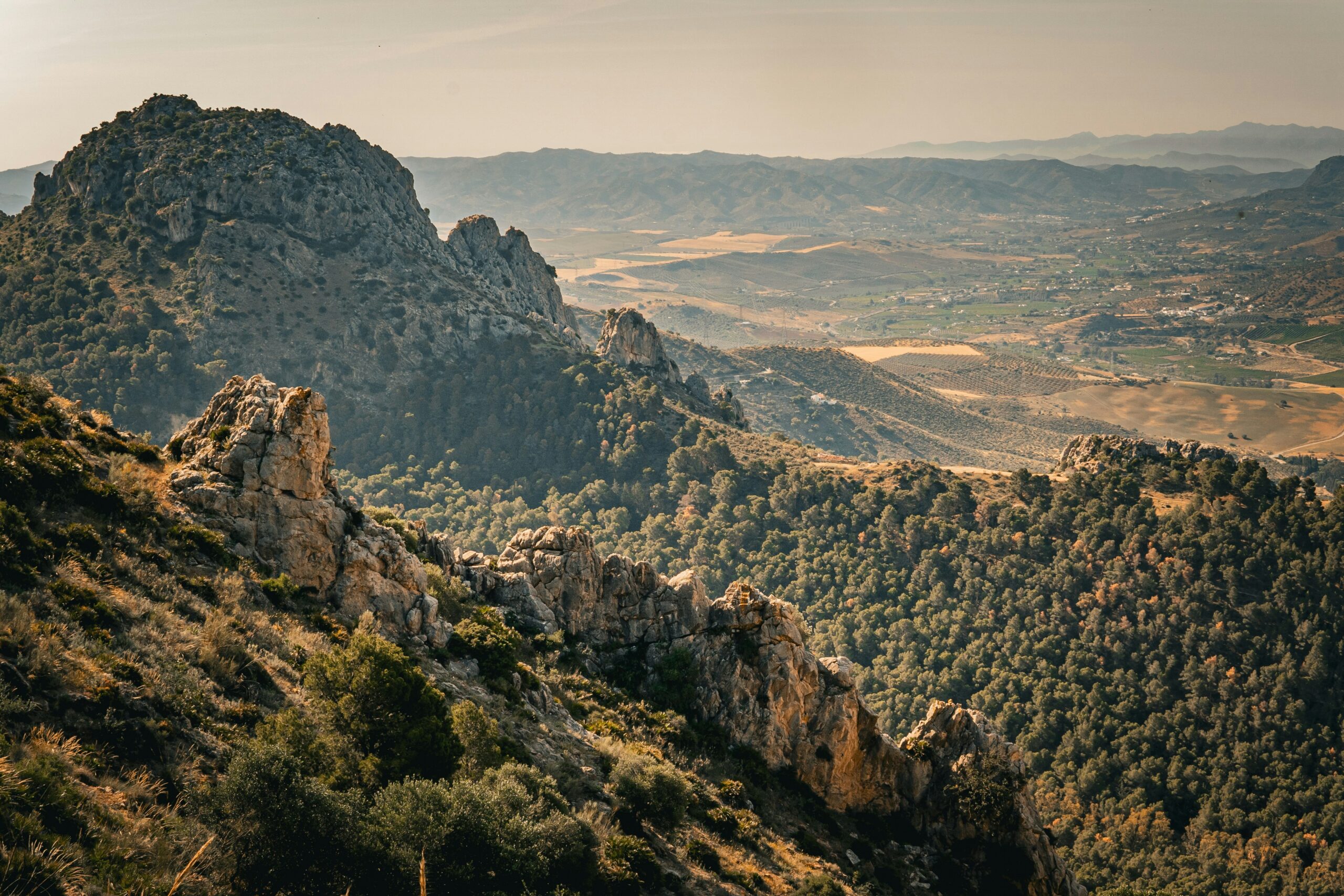
Begin in the north, because most visitors don’t, and Green Spain, as the Spanish themselves call it, feels almost like a rebuttal to every assumption about the country. Galicia’s rías, Asturias’ peaks, the Basque Country’s cliffs and pintxos bars: this is a Spain of rain and pasture and dramatic Atlantic coastline, closer in temperament to Cornwall or Brittany than to the Spain of postcards. San Sebastián alone holds more Michelin stars per capita than almost anywhere on the planet, tucked into a bay so perfectly shaped it looks designed.
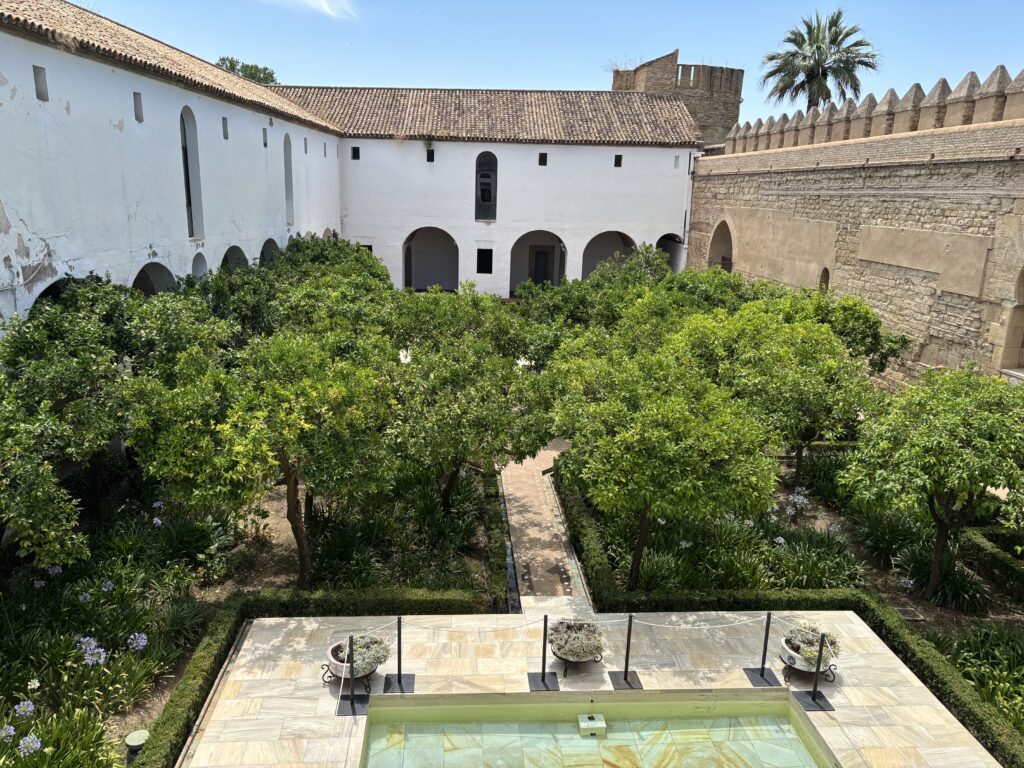
Head south and the country changes register entirely. Andalusia carries the weight of eight centuries of Moorish rule in the Alhambra’s carved arches, the Mezquita’s forest of striped columns in Córdoba, the whitewashed pueblos blancos scattered across hills that turn gold by August. The Camino de Santiago still draws pilgrims and walkers by the hundreds of thousands each year, a thousand year old route that somehow still feels like discovery rather than a well worn track. And inland, Castile stretches out in a way that catches people off guard, vast plains and medieval walled towns like Ávila and Segovia, a Spain built entirely on stillness rather than spectacle.
Then there are the islands, each with its own temperament. The Balearics hold both the party reputation of Ibiza and the quieter, more soulful pull of Menorca, whose entire landmass is a UNESCO Biosphere Reserve. The Canaries, volcanic and strange, sit closer to Morocco than to Madrid, with landscapes on Lanzarote and La Palma that look more like Mars than Europe.
Culture Lived Out Loud
Spanish culture resists generalisation almost by design, because the country itself is really a federation of strong regional identities rather than one uniform whole. Catalan, Basque, Galician and Castilian Spanish are all spoken as first languages, each carrying its own literature, food and sense of self. What unites them, loosely, is a rhythm of life built around lingering: long lunches, later dinners, an evening paseo that turns simply walking into a social ritual.
Food follows the same regional logic. Pintxos in San Sebastián bear little resemblance to the tapas of Seville, and both are worlds away from a proper Galician seafood spread or a Valencian paella cooked over orange wood, the dish’s actual origin rather than the tourist version served everywhere else. Flamenco, born in Andalusia out of Roma, Moorish and Sephardic influences, remains one of the rawest and most emotionally direct art forms in Europe, best encountered in a small bar in Jerez or Triana rather than a staged tourist show. Wine culture runs deep and varied too, from Rioja’s structured reds to the almost briny whites of Rías Baixas, each region as distinct as the land that produces it.
A Landscape Learning to Heal Itself
What makes Spain genuinely interesting from a regenerative perspective is the scale of the ambition. This is a country that has spent decades losing rural population to its cities, leaving behind what’s often called España vaciada, emptied Spain, and it has increasingly turned that crisis into an opportunity for ecological restoration. Rewilding Europe has made Spain one of its central focus areas, with major projects underway in the Iberian Highlands and the Greater Côa Valley near the Portuguese border, reintroducing species like the European bison and helping Iberian lynx populations recover from what was, not long ago, the brink of extinction. That recovery counts among the great conservation successes anywhere in Europe, the lynx population having climbed from barely a hundred individuals two decades ago to well over a thousand today.
Spain has also become, almost quietly, a renewable energy powerhouse, generating well over half its electricity from renewable sources in recent years, with vast solar developments across the south and wind farms threaded along Galicia’s ridgelines. Extremadura and parts of Castile, long overlooked by tourism, are being reframed around exactly this kind of slow travel and ecological recovery, dark sky reserves, birding routes through steppe habitat that holds some of Europe’s last great bustard populations, and small rural hotels built specifically to funnel income back into villages that tourism had otherwise passed by for generations.
The national parks system tells its own version of this story. Spain holds more UNESCO Biosphere Reserves than almost any other country on earth, and places like the Ebro Delta and Doñana, for all the water pressures Doñana still faces, remain central to a growing conversation about balancing agriculture, tourism and wetland preservation in one of Europe’s most important bird migration corridors.
It amounts to a country still working out exactly what it wants to become, torn between its enormous tourism economy and a rural interior in real need of repair, but pushing, unmistakably, toward putting the two in service of each other rather than in conflict. Spain was never short on beauty. What’s changing is the seriousness with which it’s starting to protect it.