
"To recognise their makers as cultural connectors, or gate-openers."
Rhiannon Batten
From souvenir to storyteller: rethinking how tourism supports craft
A plastic comb might seem an unlikely object to prompt an epiphany but, picking one up from a shelf in one of the souvenir shops that weave through the Old Quarter of Cordoba last spring, the thoughts that had been slowly working themselves into a knot in the back of my mind began to untangle.
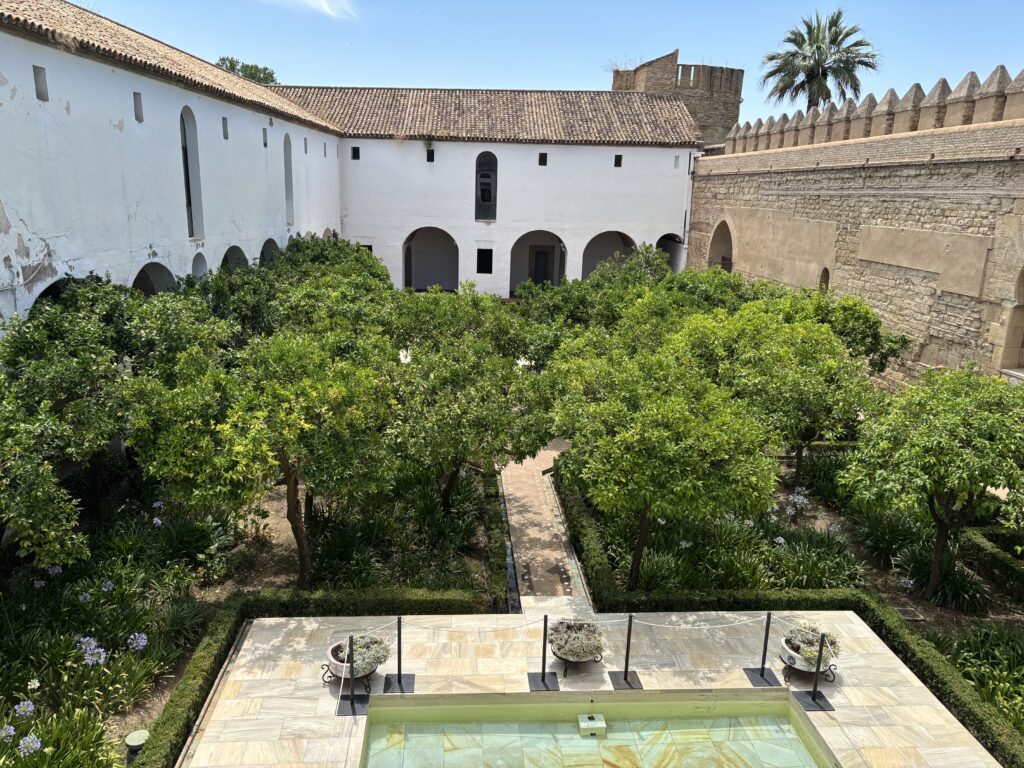
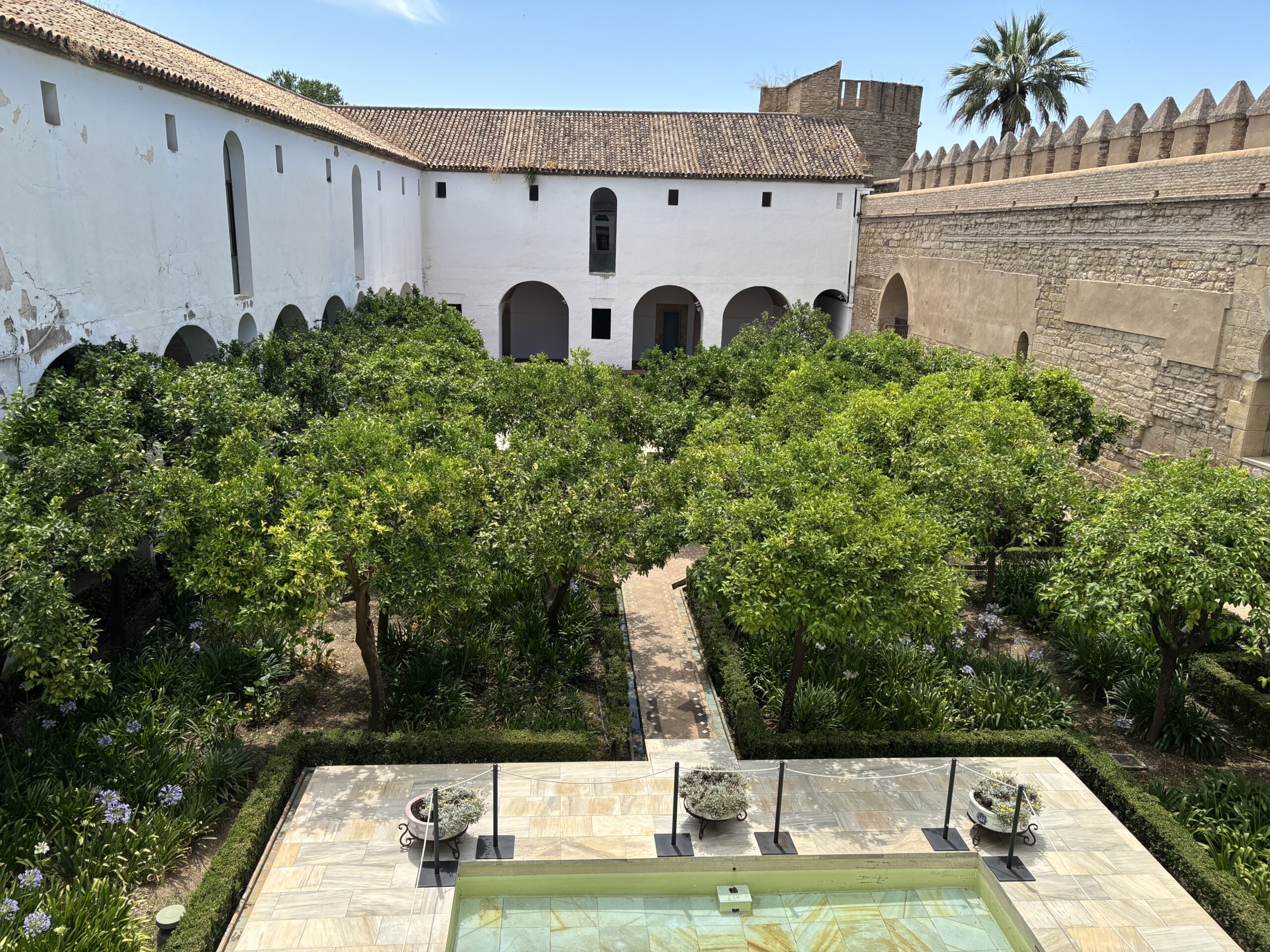
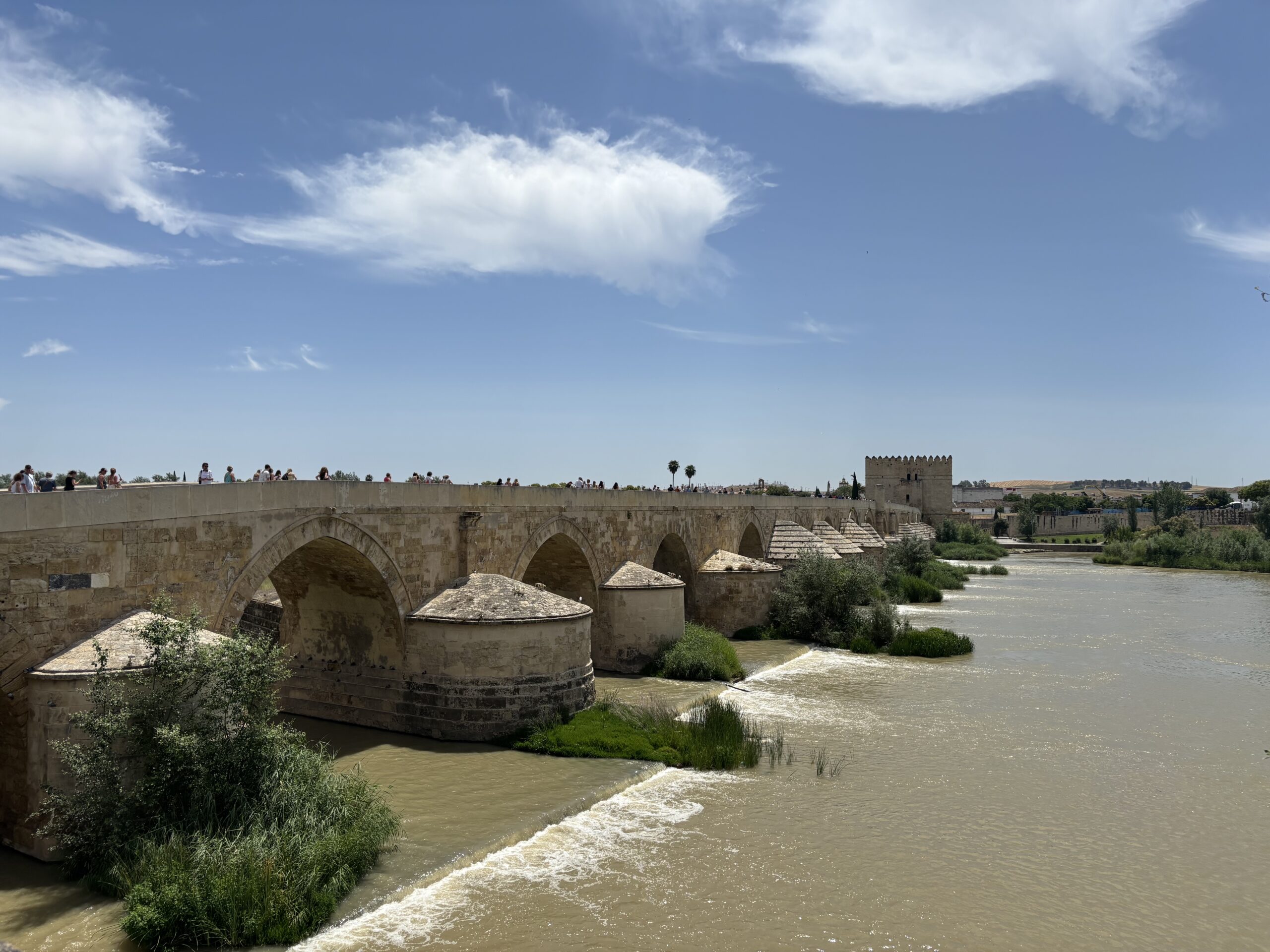
Cordoba is home to three UNESCO World Heritage Sites – its 8th century mosque-cathedral, the surrounding Old Quarter and the Medina Azahara archaeological site – and holds Intangible Cultural Heritage status for its Festival of the Patios, an annual celebration of the city’s traditional, flower-clouded courtyards. Having walked beneath a canopy of red-and-white Umayyad arches at the Mezquita, sought out shade among the reflective pools of the Alcázar de los Reyes Cristianos and eaten cooling salmorejo soup in a restaurant set within one of those bougainvillea-draped courtyards, however, that humble souvenir shop comb demonstrated just how easily cultural heritage becomes commodified.
Tourism offers many opportunities to support cultural heritage and craftsmanship but it can also hollow them out. Because, while that comb was emblazoned with a geometric azulejo pattern inspired by the architecture of the neighbouring Mezquita and the Alcázar, it was a cheap, factory-made souvenir produced thousands of miles away. It may have been supporting a few local retail jobs but it was doing little to sustain the centuries-old skills it was profiting from, nor to bring to life the local architectural wonders in which they were so spectacularly showcased.
Of course more finely crafted souvenirs are available in Cordoba; a little further along the street I came to an independent boutique stocked with the green-glazed pottery that’s synonymous with the potteries of nearby Ubeda while the Asociación Cordobesa de Artesanos is a collective of local leatherworkers, silversmiths and ceramicists producing exquisite work by hand. Even if you know where to find such treasures, however, showcasing or buying them is only the first step in supporting cultural heritage. If hospitality businesses really want to sustain the continued existence of those crafts, more powerful ways to do that include helping visitors to meet makers, learn about their techniques and practices, and support new markets for them.
Key Facts:
- Souvenirs often extract value from craft without sustaining it — Batten's Cordoba comb as an example.
- Ownership beats retail: Casa das Penhas Douradas (Portugal) bought a failing weaving mill, trained new artisans, and built maker tours around it.
- Recognition isn't protection: Barcelos holds UNESCO craft-city status, yet its artisan traditions remain vulnerable to industrial competition and an aging workforce.
- Human storytelling turns craft into experience — per Graham Miller (Nova School of Business and Economics), culture connects only at personal, one-to-one scale.
What Portugal, Spain and Andalusia teach us about keeping heritage alive
One place that does all of these things is Casa das Penhas Douradas, a mountain hotel in Portugal’s Serra da Estrela. When founders Isabel Costa and João Tomás began developing the site in the early 2000s they put their regenerative beliefs at the hotel’s heart, choosing to build with sustainable materials such as cork and birch. More unusually they also bought a local heritage cloth manufacturer, saving it from insolvency, retaining its 19-century machinery and bringing in master weavers to mentor younger workers. Developing new colours, products and applications for burel, a heavy woollen fabric unique to the region, the object was not just to produce something to decorate the hotel with but to retain the infrastructure behind it, creating employment and new markets, and ensuring burel’s future.
As Costa and Tomás proved, sustainability in the cultural heritage sector doesn’t have to mean preserving skills and artefacts as museum pieces. Sometimes innovation is necessary to survive. Crucially, the pair also worked to integrate the cultural heritage of the cloth with the tourism experience, offering guests maker-led tours of their factory, where burel’s production can be explained in the context of local history, agricultural traditions and landscape.
By contrast, around 250km northwest of Casa das Penhas Douradas, the town of Barcelos, holds a UNESCO Creative City of Crafts and Folk Art label thanks to its long history as a centre of ceramics, embroidery, basketry and other crafts. While, on the surface, the town’s cultural heritage seems to be driving tourism, recent studies seem to suggest that Barcelos’ cultural heritage itself remains vulnerable, threatened by competition from industrial products and by the rising age of its artisans.
One way to mitigate those risks is not only to question whether something is locally made but – just as you might expect to see a list of suppliers on a restaurant menu – to think about who made it, whether they are properly credited and paid, whether the relationship is long-term, whether new uses, or markets, might be developed and whether the knowledge behind the object is being shared. To move beyond the framing of heritage crafts as products – ones with which a business might be marketed as atmospheric, locally attuned and distinct from bland corporate brands – and to recognise their makers as cultural connectors, or gate-openers.
Before you can do that, however, it’s helpful to pin down exactly which culture you’re trying to connect visitors to. Graham Miller, Professor of Sustainable Business at the Nova School of Business and Economics, in Lisbon, says that a recent explosion of hotel development in Lisbon has prompted questions around definitions of Portuguese culture. “If you’re not careful you can end up with a very stereotypical list – pastel de nata, fado music, Christiano Ronaldo and sardines. Even if a hotel says, ‘we’re going to be Portuguese, we’re going to be authentic,’ you step into this contested territory.”
This is, perhaps, one reason why small, rural businesses often do cultural connection best. Take Las Chimeneas, a modest mountain hotel in Andalucia. Book a stay and you will get a flavour of Spanish and Andalucian culture. Stronger than either of those, however, is the sense of gentle immersion in hyper-local Alpujarran traditions.
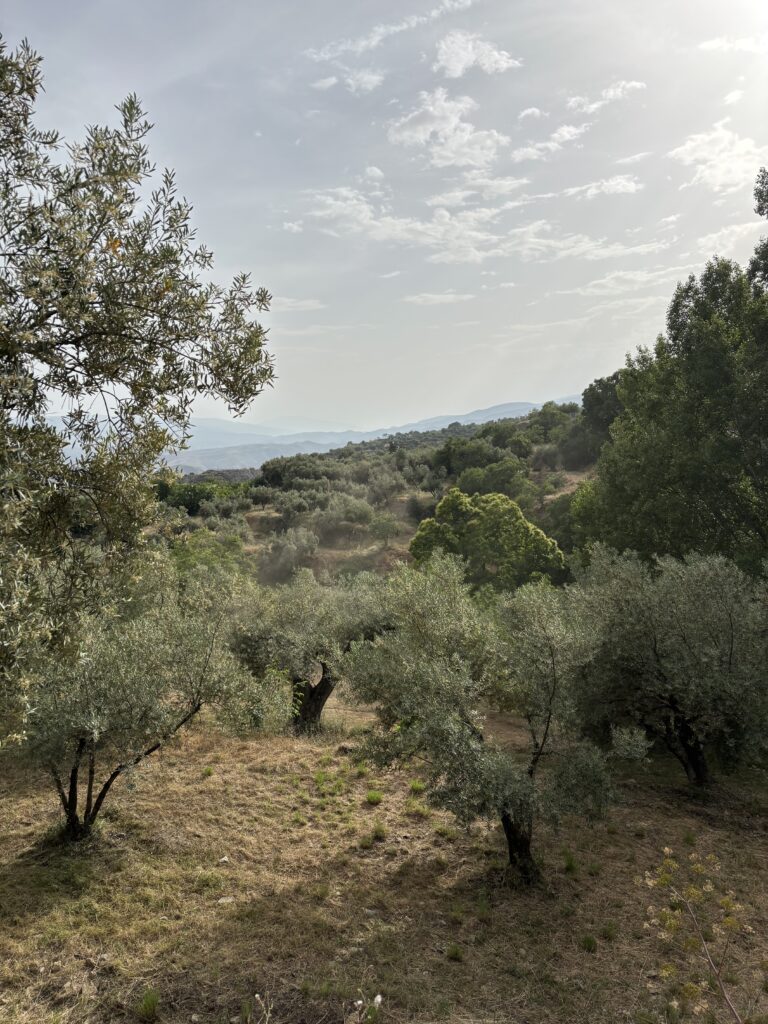
While many guests choose to stay on site and simply unwind amid the almond and olive trees others take up the offer to visit local weaver, Lola García Moreno, tour one of the local artisan cheese-makers or catch the tanda in operation – an ancient irrigation system introduced by the Moors in which harvested snowmelt is distributed to parcels of land in portions of time, rather than volume, using small gates and dams.
“Giving insight about local customs – often linked to some kind of craft or produce that people can then buy – is our way of connecting guests to culture and heritage,” says co-owner Emma Illsley. “It’s about experience as much as buying because that’s what creates the interest”.
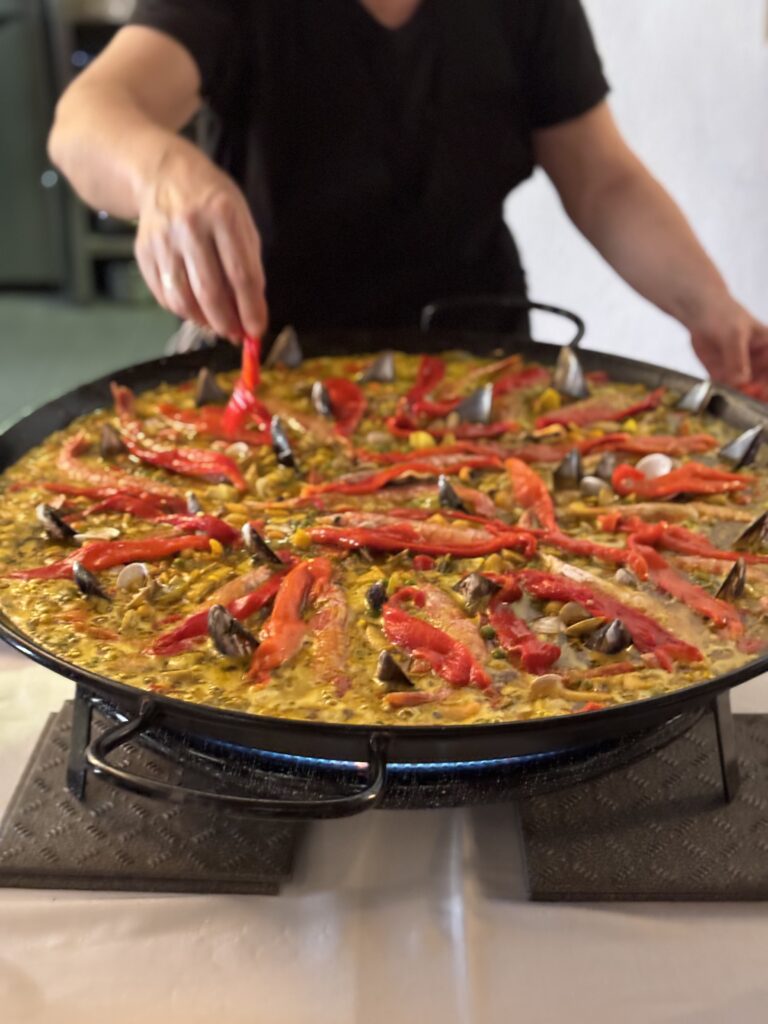
Nowhere is this more palpable than with the hotel’s food experiences. After leaving Cordoba I drove up into the hills for a paella demonstration with Las Chimeneas’ cook, Conchi Garzon Roman. Conchi comes from the village and celebrates recipes handed down over the generations by Alpujarran families. As she threw gigantic prawns into a shallow pan of rice, she explained how paella came to be a classic dish in these hillside villages, an hours’ steep drive from the sea. “People have always eaten it up in the hills”, she and Emma told me. “Merchants used to carry up fish and seafood from Andalucia’s coast in baskets of ice balanced on mules and barter them for produce grown in the orchards and vegetable patches higher up”.
Why the future of cultural tourism depends on the maker, not the market
The guest wing added in 2019 was built almost entirely from materials sourced within a 40-kilometre radius. Larch from the communal forest managed by the village. Stone from a local quarry. Wool insulation from a cooperative in the Inn valley. The architect, based in Innsbruck, had worked with all of these suppliers before. The construction cost was comparable to a conventional build. The embodied carbon was roughly 60% lower.
By chance I had stumbled across one of Miller’s recommended cornerstones for regenerative cultural heritage. “Storytelling is what moves culture from a commodity to an experience and it needs a person to do that,” he explains. “When you’ve got an artisanal cheese-maker, or potter, or glass-blower or tile-maker culture is distilled to a scale that you can experience in a personal way, either one-to-one or in a small group”.
Such interaction may be a challenge for younger generations who don’t particularly want face-to-face contact but Miller believes many of us are now so saturated with the digital that we are starting to value the human again.
While he also reminds me that culture as commodity can have an escalator effect – “if you’ve never been to a museum or a pottery shop, you might want a softer start to begin with than launching straight into talking to a maker” – perhaps those old Andalucian merchants with their mules had the right idea: relish cultural differences, aim for meaningful exchange and don’t ride roughshod over anything.