
INSIDER VOICE

Sonia Teruel

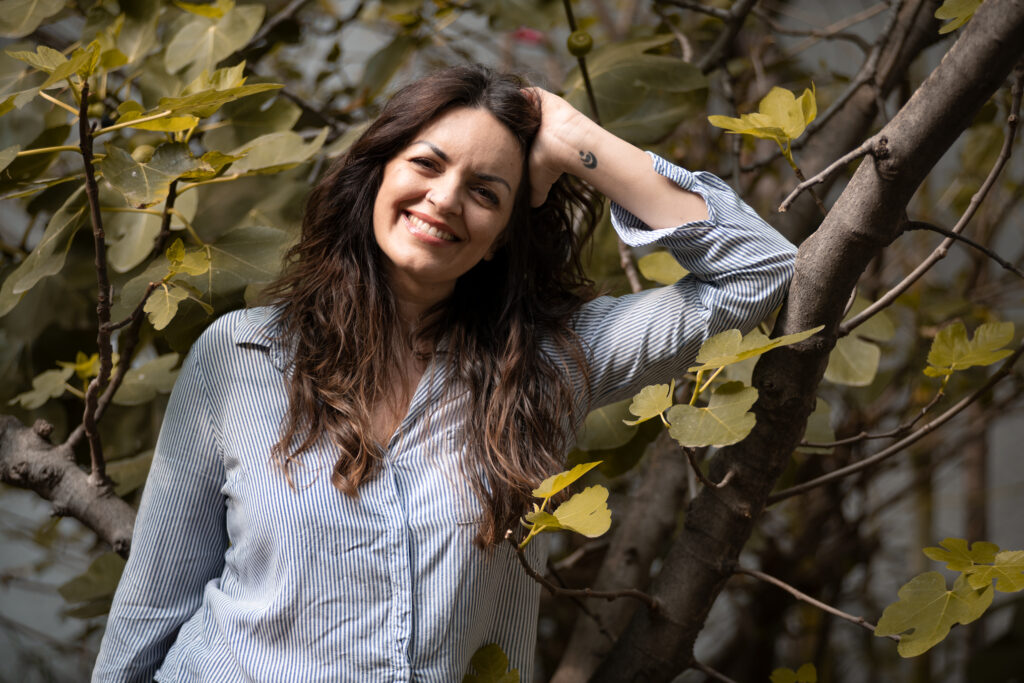
Sonia Teruel is a Spanish-born researcher, educator, and consultant specializing in regenerative tourism, and co-founder of The RegenLab for Travel, a platform helping organizations and entrepreneurs transition toward regenerative practice in the sector. She holds a Master’s degree in sustainable tourism management from the University for International Cooperation (UCI) in Costa Rica, where she specialized in and wrote one of the earliest master’s theses on regenerative tourism, published in 2018 with the explicit goal of triggering further academic research on the topic — at a time when almost nothing had been written on it. For years she worked in Mexico with Totonal Viajes, an ethical tour operator, first as Business Development Manager and later as General Manager, where she helped lead the organization’s transition from a sustainability model to a fully regenerative one, working closely with rural and indigenous communities across the country. Her practitioner work there centered on co-designing tourism experiences with host communities — grounded in what she calls the “three relationships”: a traveler’s relationship with themselves, with others, and with nature. She is a glocal representative for the Global Initiative for Regenerative Tourism, contributes regularly to publications including The “Good Tourism” Blog, and continues to lecture, consult, and write — including through her own Substack, The RegenLab for Travel — on the principles and practical application of regeneration in tourism, travel, and hospitality.
Destinations Focus:EuropeSpain
3,958

Followers

19

Consultant

Her perspective on regenerative travel

On the credibility gap

What she looks for

Four questions from Veriva

1

Honest View

What makes a place regenerative rather than merely sustainable?

“It starts at the roots. A place becomes regenerative when a project starts from the place itself, seeking its vitality and viability before even talking about tourism. One example is the MASAV (Open Museum of the Sierras of Ávila and the Amblés Valley) in Ávila, Spain, where I worked as a consultant and facilitator. The project sought to bring the memory of the landscape to life, restore local pride and belonging, and create new ways of making a living that could bring vitality back to the place and give young people a reason to return. Through sessions with residents and different local actors, they collectively felt and described the essence and identity of the place, identified its potential, imagined the future they wanted, and created a shared purpose. Only then did tourism naturally become one of the tools, leading to co-created immersive experiences rooted in the place and built around respect and reciprocity. This process makes a fundamental difference: the relationship with visitors is built from a deeper connection to place, rather than from a tourism product imposed upon it. “
2

A reason for hope


When someone tells you a place is doing good work — what makes you believe them, and what makes you doubt?

“I am interested in seeing whether genuine relationships are being created within the place. If it is a tourism establishment, is its staff involved in decision-making? Is leadership more horizontal? How, rather than extracting from a place and then perhaps trying to compensate for that impact, is the project creating life and generating flows that feed back into the place? Are they regenerating water, supporting regenerative agriculture projects, or building reciprocal relationships with local farmers? I want to see whether the establishment is genuinely serving the place, or whether it has simply settled there without considering its needs or aspirations. It is not enough to use the right words. They need to be demonstrated through action. When a project arrives in a place to “help”, or with the premise of “leaving the place better than it found it”, that is a red flag for me. I would ask more questions to see whether it goes beyond a “heroic” act, or whether it has genuinely immersed itself in the community, sees itself as part of it, and is working collaboratively to create the conditions for life to thrive in the place. “
3

The honest critique

What does the travel industry need to stop doing — including your own part of it?

“From my field, community development and destination management, one thing we need to stop doing is designing and funding projects around short-term results. When projects are too short, it becomes difficult to create the deeper processes needed to build a regenerative culture, with collaboration, local leadership and life at the centre. Creating new economies and different ways of doing things takes time, creativity and experimentation. It is also frustrating to see consultants or project leaders, such as public administrations or some associations, already having a desired outcome in mind, turning community processes into little more than a box-ticking exercise. Projects need to be co-created with a diverse range of local actors, and what emerges from these spaces needs to be taken seriously and acted upon. We also need to find ways to give these processes continuity through shared and inclusive governance. Regeneration needs time, creativity and genuine participation to take root. “

I am interested in seeing whether genuine relationships are being created within the place.

4

The one place

Name one place that changed how you think about travel. What happened there?

“When I first arrived in Mexico, I was looking for community-based tourism projects. Someone recommended Los Tuxtlas, in Veracruz, and the experience changed the way I understood travel. I arrived in a place where the hosts treated me like family, sharing their wisdom and taking me into their territory, their home. Later, as an inbound tour operator in Mexico, I worked with similar projects. I remember a group of women in Cuetzalan, in Puebla, who had built a hotel so their husbands and children would not have to migrate to the US. They would sit with you and share their history, culture, landscapes, the food they grew and the beautiful projects they had in their cooperative. I have experienced this in different parts of the world ever since. What I now look for is that feeling of being part of a place, where I can also contribute if that is genuinely wanted. The small grain I may offer feels tiny compared to what I receive, and that reciprocity opens my heart. “

Location

Mexico

Best time to travel

Winter

Articles in the media
Become an Insider Voice

A permanent home for your honest perspective — on a platform built
specifically for the future of regenerative travel.

Answer four questions.
Share your work.

We build your profile page — a permanent, beautifully designed home for your perspective on Veriva. Your photo, your bio, your favourite place, your links.
The page is yours.

Name, bio and a link.
That's it.

Not ready for a full profile or short on time? A minimal listing places you in the Veriva directory: your name, a short bio, and a link to your work. You can expand it to a full profile at any time.

Join the Veriva community.

Stories worth reading. Places worth supporting. Subscribe for editorial updates, regenerative travel inspiration, and early access to new features and verified stays.

Apply as a Founding
Partner