
INSIDER VOICE

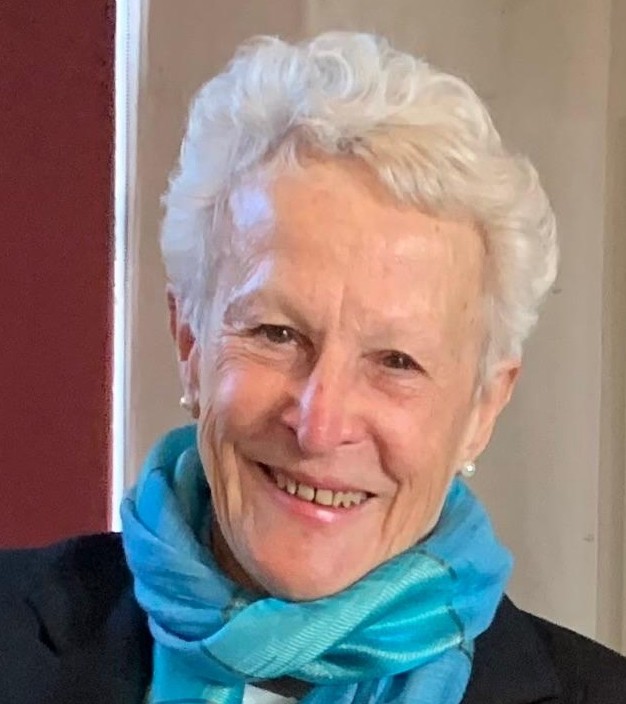
Anna Pollock

Anna Pollock is a British-born tourism strategist, speaker and writer, widely regarded as one of the pioneers of regenerative tourism. Her career spans roughly five decades. Her international outlook began early: at 15 she travelled alone by train from London’s Victoria Station to Stuttgart on a school exchange. A later stay in Bali shook her assumptions and showed her very different ways of seeing and being in the world. After graduating with first-class honours from London University, she began her professional career in western Canada. There she did early work in tourism human resource development, sustainable tourism, health tourism and adventure travel, before moving into technology and trend forecasting. She helped create the Tourism Industry Association of British Columbia, now a major advocacy body, and the Pacific Rim Institute of Tourism, which focuses on professional development. In 1999 the British Columbia industry gave her its Visionary Award. She went on to run an international consultancy offering strategy, research and advisory services to destinations. Her clients have included the Canadian Tourism Commission, PATA, the European Travel Commission, Tourism British Columbia, Tourism Tasmania, Innovation Norway, Visit Flanders, Rotterdam Partners, and New Zealand government departments. Frustrated by how slowly mainstream tourism addressed its environmental impact, she founded Conscious Travel as an alternative to mass industrial tourism. It helps hosts and communities collaborate to create greater net value for both business and place. As early as 1995, she was calling for tourism to play a role in healing places and relationships. From 2016 she supported Visit Flanders’ Travel to Tomorrow programme, which shifted the region’s official policy from volume growth to destination flourishing. She was the only non-New Zealander on the Tourism Futures Task Force behind We Are Aotearoa (2021). In 2021 she was a finalist in the Visionary category of Newsweek’s Future Travel Awards, and in 2022 she received a Lifetime Achievement Award. In 2023 she co-authored, with Loretta Bellato, “Regenerative tourism: a state-of-the-art review” in Tourism Geographies. Her current focus is where hospitality, farming and food meet. This includes work with Regenerative Vanua in Vanuatu, supporting climate-resilient communities through regenerative agritourism and a revival of Indigenous food culture.
Destinations Focus:EuropeUnited Kingdom
12158

Followers

55

Regenerative Tourism Pioneer

Her perspective on regenerative travel

“”Tourism is proving far more vulnerable than many want to admit.” Anna Pollock gives “regenerative tourism” a rigor most voices skip. She insists it is a change of worldview, not better practice. Tourism’s problems come from a mechanistic, growth-obsessed paradigm, and greener operations within that same model don’t count as regeneration. She keeps clear lines. Sustainability means doing less harm; regeneration means increasing a living system’s capacity to thrive. Tourism isn’t an industry but part of a place, so the starting question is what a place’s unique potential is and how tourism can serve it. Local hosts and communities sit at the centre, and practitioners must do their own inner work to think in living systems. She openly criticises “regen-washing” and argues regeneration can’t be certified or checklisted. It is an ongoing process of relationship, not a label. “

On the credibility gap

“For more than five decades, Anna Pollock has watched tourism grow into one of the most powerful forces on the planet. For much of that time, she has asked an uncomfortable question: what if sustainability, for all its good intentions, is quietly letting the industry off the hook? Her argument is simple but challenging. Sustainability focuses on reducing damage: less water, less carbon, a smaller footprint. These are worthy goals, but they address symptoms rather than causes. Worse, they can create a comforting illusion that the underlying model is sound, and that with a few adjustments tourism can carry on as before. Pollock sees this as the real gap: between what sustainability promises and what it actually changes. An industry can tick every box and still extract more from a place than it gives back. Her answer is not a stricter checklist but a different starting point. She sees people as part of nature rather than separate from it, and places as living systems rather than resources. Success is measured by whether a community and its ecosystem flourish, not by harm avoided. In her words, “if done properly, tourism can become a vital regenerative force in communities.” The operative words are “if done properly.” Closing the gap between intention and effect is where the real work begins.”

What she looks for

“Anna Pollock isn’t looking for better sustainability reports. She’s looking for evidence that a place is becoming more alive because tourism is there. First, she looks for communities in charge. The people who live in a place should decide how much tourism they want, what kind, when and where, not have those decisions made for them by marketers or investors. Second, she looks for net value, broadly measured. That means not just revenue, but social, cultural, ecological and financial returns that stay in the place and strengthen it over time. Third, she looks for hosts, not operators. She has long championed the small and micro businesses that make up most of the industry: caring hosts rooted in their place and willing to act as agents of change in their communities. Fourth, she looks for collaboration over competition: businesses, residents and ecosystems reinforcing each other rather than competing for the same limited resources. Above all, she looks for the right question at the start. Instead of “how do we reduce our impact?”, she asks “how do our actions help life in this place to flourish?””

Four questions from Veriva

1

Honest View

What makes a place regenerative rather than merely sustainable?

“Regeneration isn’t something a place is; it’s something a place does. It’s the ongoing work of contributing to the conditions in which all life — human and more-than-human — can thrive and keep evolving. Regeneration is what life i.e. every cell in a living system is does every moment. The beauty and complexity we experience as living inhabitants of this amazing planet is the aggregate result of all those individual actions. Regeneration is a process. It is understood as a verb not a noun that builds capabilities in all participants within a living system to survive and thrive. No one does it alone, and no one gets to declare it finished. The outcome is greater resilience, potential realised and vitality expressed. .Just as no cell is healthy on its own inside a sick body. No place can be regenerative in an unhealthy system. Health belongs to whole systems, and a place is always part of a bioregion, which is part of a biosphere. A place is regenerative when it strengthens the health of the larger system to which it belongs. The resort in Mexico known as Playa Viva has earned the adjective regenerative because of the diverse mix of activities that the enterprise has supported over an extended period and that have brought more vitality to the whole watershed and its communities. Young people are returning to set up homes; women are operating a thriving tree nursery and food cooperative, wildlife populations are increasing in diversity and number, more young men are returning to farm, children are healthier and the core hospitality business is prospering. As far as the local village elders are concerned, the biggest indicator of success is hearing the laughter from young children whose parents have returned to raise families. As far as members of the first women’s cooperative, success is having meaningful work that develops skills and generates additional income and self-reliance. Note that many of these activities were never part of an original ten point plan – they emerged, and evolved like plants and trees in a forest. “
2

A reason for hope


When someone tells you a place is doing good work — what makes you believe them, and what makes you doubt?

“This question and the survey as a whole requires us to understand what we mean by use of the word place in the context of tourism. I am more likely to believe a place is “doing good work” if they don’t tell me about the work until I have been able observe, sense or experience outcomes that express greater vitality, health, resilience. I become even more sceptical if the word regenerative is used to market the property. Becoming regenerative involves developing the ability to think holistically; sense (emotionally, intuitively, energetically and physically) the extent to which aa community and its environs are fully alive and flourishing; and then discern how your activities can contribute to that flourishing.”
3

The honest critique

What does the travel industry need to stop doing — including your own part of it?

“Stop seizing every new idea, word, or concept and using them to convey your brand’s “USP” without taking the time to understand the meaning and the implications of applying such terms to your business. Start recognising that destinations may exist in the eye or mind of the traveller but, in reality, are someone’s home. They are not products to be branded, labelled, bought or sold by third parties designed by the system to extract value leaving the costs to be absorbed by residents. Stop pretending that business as usual is either desirable or possible. An industry that insists on recognising volume growth (#’s of visitor and spending) is deluding itself. Yes, some places in the world still have space and the resources to support more visitors, but the most popular established destinations need to redefine success differently. Let go of the prevailing idea that regenerative destinations have visitors who leave the place better than they found it. That’s a host responsibility. What we need is for visitors to leave inspired, encouraged, rejuvenated and informed having experienced a place that is healthy and thriving in every respect as this will motivate them to realise such outcomes at home. “

I become even more sceptical if the word regenerative is used to market the property.

4

The one place

Name one place that changed how you think about travel. What happened there?

“The one place that has given me most hope and supported my belief that meaningful change is possible is the country of Vanuatu in the Pacific. In response to the Covid pandemic, the foreign investors that owned most of the hotels shut up shop and left their employees stranded. The indigenous leaders welcomed their young back home a.) to re-learn traditional farming and fishing practices and social values that had been rejected and neglected by the youth; b). to take pride in their own culture and food and c.) wean themselves off the highly processed food that was causing a diabetes epidemic. In less than seven years, Regenerative Vanua, an indigenous run NGO has demonstrated how resilient and self-determined Vanuas can revive traditional stewardship, restore pride in indigenous food systems and culture, and develop regenerative agritourism, gastronomy and food systems that are contributing to the health, self-sufficiency, and vitality of the oceans, reefs, rivers and forests. Their success can be directly attributed to their Vanua and their profound respect for their relationship between custodians of the land and the land itself. Of relevance to tourism is their rejection of places (Vanuas) as destinations but as homelands whiich their communities must care for. It is not surprising to me, having enjoyed their hospitality that, while Vanuatu is often named as one of the poorest countries in the world, international surveys have identified it to be the happiest! “

Location

Vanuatu in the Pacific

Best time to travel

May to October

Articles in the media

Become an Insider Voice

A permanent home for your honest perspective — on a platform built
specifically for the future of regenerative travel.

Answer four questions.
Share your work.

We build your profile page — a permanent, beautifully designed home for your perspective on Veriva. Your photo, your bio, your favourite place, your links.
The page is yours.

Name, bio and a link.
That's it.

Not ready for a full profile or short on time? A minimal listing places you in the Veriva directory: your name, a short bio, and a link to your work. You can expand it to a full profile at any time.

Join the Veriva community.

Stories worth reading. Places worth supporting. Subscribe for editorial updates, regenerative travel inspiration, and early access to new features and verified stays.

Apply as a Founding
Partner