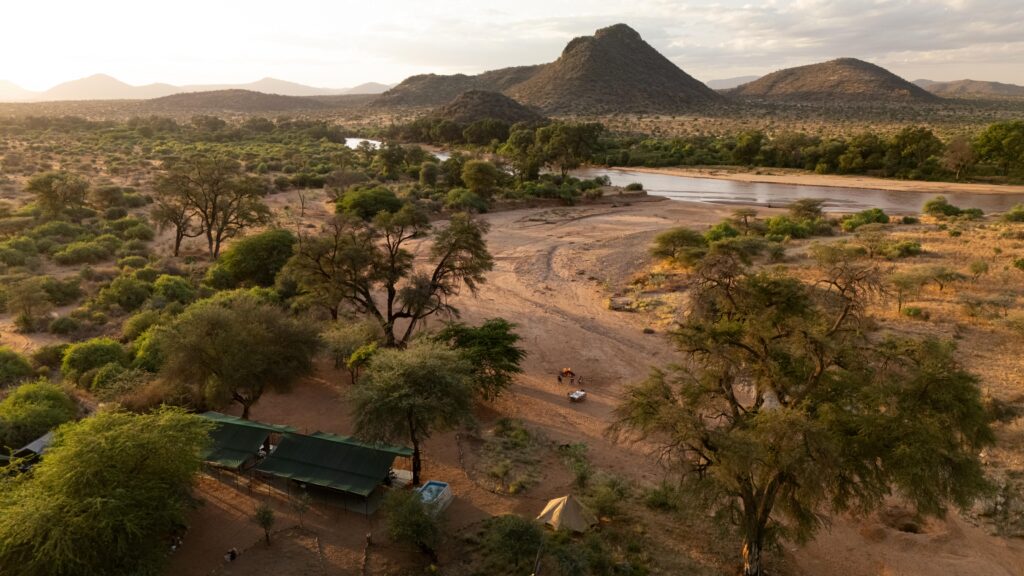

"The greatest opportunity lies in helping the industry bridge the gap between sustainability commitments and demonstrable impact, while remaining independent, rigorous and accessible to smaller tourism businesses."
Brigitte Hidalgo
The Greenwashing Crackdown: Why Vague Claims Won't Survive 2026
As the EU’s EmpCo Directive reshapes how travel brands can talk about sustainability, Tourism Innovation Summit director Silvia Avilés explains why “regenerative” is replacing “sustainable” in the industry’s vocabulary and why verification, not ambition, is becoming the real currency of trust.
- TIS 2026’s theme is “the new generation of travel & hotel tech” — where does sustainability/regenerative tourism sit within that framing this year versus previous editions?
Sustainability has always been a core pillar of TIS, but in 2026 we want to address it in an even more specific and comprehensive way. For us, sustainability is not only about environmental impact. It is also about the economic and social impact that tourism generates in destinations and how we can build a model that creates long-term value for businesses, local communities and territories.
That is why sustainability will not be treated as a separate conversation at TIS 2026. It will be integrated across the event, looking at how destinations and tourism businesses can become more sustainable while remaining competitive, profitable and capable of generating greater value for their communities. Technology plays a key role in making this possible. Data, AI and digital tools are giving destinations and businesses a much greater capacity to measure their impact, understand what is happening in real time and, most importantly, make better management decisions. You cannot improve what you cannot measure, and technology is increasingly allowing the tourism industry to move from commitments and intentions to measurable results.
This applies to very practical challenges: managing visitor flows and destination capacity, reducing pressure on certain areas, improving coexistence between residents and travellers, measuring the environmental footprint of accommodation, optimising resources and operations, or understanding more precisely the economic and social value that tourism generates in a destination.
Regenerative and positive tourism will also be an important part of this conversation. We want to go beyond simply reducing the negative impacts of tourism and ask a broader question: how can tourism leave a positive legacy in the places where it operates? That means protecting biodiversity and restoring natural environments, but also strengthening local economies, creating opportunities for communities and ensuring that the value generated by tourism has a positive impact on the territory and quality of life. We will also look at how companies and destinations can use data to measure and communicate their progress more rigorously, particularly in the context of the new European rules on environmental claims.
All these dimensions will be reflected through international case studies, the presentation of the Rural Tourism Observatory 2026 and the Sustainable and Regenerative Tourism category at the Tourism Innovation Awards.
Ultimately, the message we want to convey at TIS 2026 is that sustainability is no longer only about reducing impact; it is about measuring, managing and increasing the positive value that tourism creates. Technology is what increasingly allows us to turn that ambition into concrete decisions and measurable results. And that makes sustainability a fundamental part of competitiveness, investment, innovation and the long-term future of the industry .
- TIS now brings together more than 200 exhibitors, over 400 speakers and thousands of attendees. How has the sustainability conversation among exhibitors changed as the event has scaled?
As TIS has grown, the sustainability conversation has become more mature, practical and evidence-based. In the early editions, the focus was often on individual initiatives, such as energy efficiency, waste reduction or responsible travel. Today, the discussion is increasingly focused on how sustainability can be embedded across day-to-day operations and supported by technology.
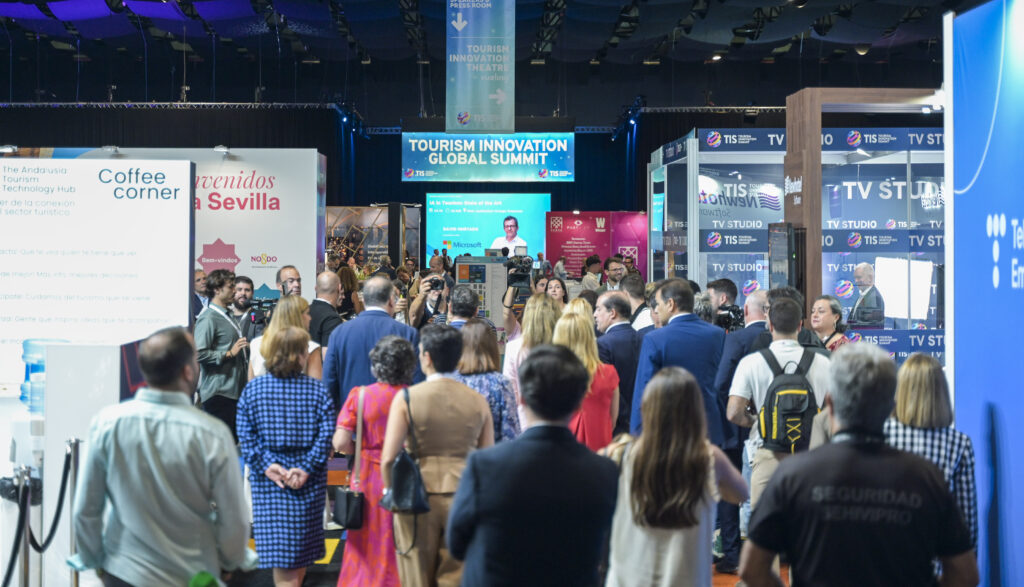
At TIS, more than 200 exhibiting companies showcase the latest technologies and innovations shaping the future of tourism. Among them are a growing number of solutions designed to help destinations and tourism businesses become more sustainable. These include platforms that measure and reduce environmental impact, tools to monitor energy and water consumption, AI-powered systems for managing visitor flows and preventing overcrowding, solutions that optimise resource efficiency in hotels, and technologies that help organisations collect, verify and report sustainability data in line with evolving regulations.
On verification and greenwashing
- With the EU’s EmpCo Directive applying from September 27, 2026, are you seeing exhibitors and speakers already adapting their sustainability claims and marketing language?
Yes, although not every organisation is at the same stage. As the new rules come into force, we’re already seeing companies move away from broad claims such as “green”, “eco-friendly” or “carbon neutral” and towards more specific statements that can be supported with clear evidence. Businesses are reviewing not only the language they use, but also the data and processes behind those claims.
That shift is reflected in the conversations we’re preparing for TIS 2026. One of the keynote sessions will be delivered by Professor Xavier Font, one of the leading experts in sustainable tourism and sustainability communication. He will explore how the EU’s Empowering Consumers for the Green Transition Directive is changing the way tourism businesses and destinations communicate their sustainability efforts. Rather than focusing on ambition or good intentions, organisations now need to communicate with clarity, evidence and legal certainty. His session will also examine the risks of greenwashing and greenhushing, changing consumer expectations, and provide practical guidance on how tourism organisations can communicate sustainability in ways that are compliant, credible and meaningful while strengthening trust and protecting their reputation.
More broadly, speakers and exhibitors are placing much greater emphasis on measurable results, recognised methodologies, certification and transparent reporting. The challenge isn’t to communicate less, but to communicate with greater precision and transparency. TIS will explore how tourism businesses and destinations can build trust through credible sustainability communication while also meeting new regulatory expectations.
- How does TIS vet or curate sustainability-focused exhibitors and speakers — is there any distinction made between verified claims and marketing claims?
TIS does not act as a certification body. However, in the selection of sustainability-related content and participants, we aim to give priority to exhibitors and speakers who can support their messages with measurable results, recognised methodologies, certifications or proven case studies. We are increasingly looking for evidence of real impact rather than broad environmental promises.
That same approach is reflected in our congress agenda. Marketing claims may form part of the conversation, but they are expected to be placed in context and challenged through data, implementation experience and regulatory requirements. The objective is to give greater visibility to credible solutions and help the industry move towards more transparent, comparable and evidence-based sustainability communication.
Key Facts:
- The EU's EmpCo Directive takes effect September 27, 2026 — forcing tourism brands to drop vague claims like "green," "eco-friendly," and "carbon neutral" in favor of language backed by verifiable evidence.
- TIS 2026 scale: the event brings together more than 200 exhibitors and over 400 speakers, with a growing share of exhibitors now building tools specifically for sustainability measurement, verification, and reporting rather than customer-facing booking/personalisation tech.
- TIS is not a certification body — but in curating speakers and exhibitors, it prioritizes those who can support claims with measurable results, recognised methodologies, or proven case studies over broad environmental promises.
- A defined distinction between "sustainable" and "regenerative" tourism: sustainable tourism has historically focused on reducing harm (emissions, waste, resource efficiency), while regenerative tourism asks how tourism can create a positive impact — restoring ecosystems, strengthening local economies, and improving residents' quality of life.
Beyond "Less Harm": What Regenerative Tourism Actually Demands
- TIS’s own materials mention “transformation towards regenerative tourism” — how is TIS defining that term, and how does it differ from what you’d have called “sustainable tourism” a few years ago?
For us, regenerative tourism means going beyond reducing tourism’s negative impacts and asking how the sector can actively improve the places where it operates. This may involve restoring ecosystems, protecting biodiversity, strengthening local economies, preserving cultural identity and improving residents’ quality of life.
A few years ago, sustainable tourism was mainly about reducing emissions, minimising waste and using resources more efficiently while balancing economic growth with environmental protection. Those goals remain essential, but regenerative tourism takes the conversation one step further. Instead of simply doing less harm, it asks how tourism can make a positive contribution to nature and local communities. At TIS 2026 we’ll explore that evolution through practical examples, real projects and collaboration between destinations, businesses and public authorities.
- Are there specific sessions, speakers, or exhibitors this year you’d point to as genuinely advancing regenerative practice rather than just using the label?
I would particularly highlight the work around nature-positive tourism, featuring Bogdan Papuc, Director at Romanian Ecotourism Association; Daniel Turner, Co-Founder and Director of Animondial; Bart Schutz, Tourism Manager at Rewilding Europe; Andrei Blumer, representing the Romanian Ecotourism Association; Jóhan Pauli Helgason, Development Manager at Visit Faroe Islands; and Manuel Filipe, Chairman of the Board of Madeira’s Institute for Forests and Nature Conservation. Their contributions are grounded in biodiversity protection, ecosystem restoration and the adaptation of tourism activity to the ecological limits of each territory.
We’ll also showcase destination case studies from Prague, Copenhagen, Dubrovnik and Amsterdam, looking at issues such as visitor management and improving coexistence with local communities. Alongside that, we’ll present the Rural Tourism Observatory 2026 and work on a common methodology for measuring the environmental impact of accommodation. These are the kinds of initiatives we consider genuinely regenerative because they are based on implementation, measurement and territorial impact.
Verification Isn't a Niche. It's Infrastructure.
On the industry/technology intersection
- Where do you see AI and data verification tools, as opposed to booking or personalisation technology, fitting into TIS’s roadmap going forward?
We see AI and data verification becoming an increasingly important part of TIS in the years ahead. So far, much of the industry’s attention has been on customer-facing tools such as booking, recommendations and personalisation. The next step is using AI to help destinations and hotels make better decisions behind the scenes.
That means using technology to improve environmental impact, measure footprints consistently, identify gaps between sustainability claims and real results, and better understand issues such as resource use, biodiversity or visitor pressure. AI can also help destinations anticipate overcrowding and manage visitor flows more effectively. But its value depends on the quality and reliability of the data it is built on. That’s why TIS will increasingly focus on the relationship between innovation, trustworthy data and accountability. Reliable information is becoming essential not only for regulatory compliance, but also for better business decisions.
- What’s one shift in destination or hotel-operator priorities you’ve noticed in exhibitor applications this year that surprised you?
One of the biggest changes we’ve seen is that exhibitors are no longer focusing only on technology that attracts more visitors. Increasingly, they’re developing solutions that help destinations and hotels manage tourism more intelligently.
Many proposals now focus on visitor management, demand forecasting, resource efficiency, improving relationships with local communities, and digital tools that optimise hotel operations and internal processes. These include solutions that help hotels streamline day-to-day management, improve staff productivity, automate routine tasks, optimise housekeeping and maintenance, and make better use of data to improve operational performance.
Perhaps the biggest surprise was how quickly these priorities have become business priorities rather than simply sustainability goals. More organisations now see resilience, destination balance, operational efficiency and sustainability as essential to long-term profitability and competitiveness.
Closing and forward-looking
- What would you want a small, independent, verification-focused platform like Veriva to take away from being at TIS this year?
I would want Veriva to leave TIS with a clear sense that independent verification is becoming essential infrastructure for tourism, rather than a niche add-on. As a platform focused on verifying regenerative stays, it should use the event to understand what evidence hotels and destinations can realistically provide, build partnerships with operators and technology providers, and test how verified information can be translated into credible, traveller-friendly communication.
The greatest opportunity lies in helping the industry bridge the gap between sustainability commitments and demonstrable impact, while remaining independent, rigorous and accessible to smaller tourism businesses.
- Where do you see TIS itself in 3–5 years, as the “innovation” conversation increasingly includes accountability and proof, not just new tech?
I see TIS evolving from a showcase of emerging technology into a platform where innovation is assessed through implementation, measurable impact and trust. New solutions will still be essential, but the conversation will increasingly ask whether they improve profitability, resource efficiency, destination management, community wellbeing and environmental performance, and whether those results can be independently demonstrated.
That means giving greater prominence to data governance, verification, harmonised measurement standards and transparent reporting, alongside AI, automation and personalisation. TIS can play an important role by connecting technology providers with operators, destinations, regulators and independent experts, helping the industry move from promising concepts to solutions that are scalable, accountable and capable of creating long-term value.