
INSIDER VOICE

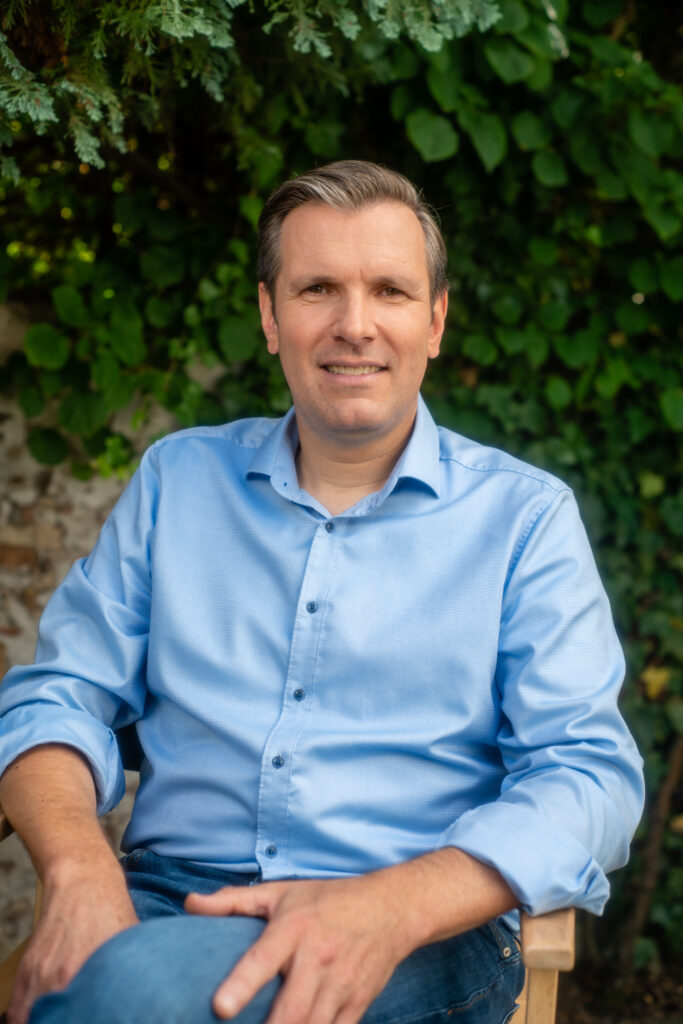
Prof. Dr. Willy Legrand

Willy Legrand teaches sustainable hospitality at IU International University of Applied Sciences in Germany. He’s spent the last twenty years building courses on sustainable development for hospitality and tourism programmes across four continents, and he’s the name behind Sustainability in the Hospitality Industry, now in its fourth edition, plus Critical Questions in Sustainability and Hospitality. He co-chairs the Hospitality Net World Panel on Sustainability and sits on GRI Club’s sustainable hospitality committee. Most recently he edited a Hotel Yearbook issue on regenerative hospitality with EHL’s Carlos Martin-Rios and Alessandro Inversini — asking whether the industry can organise itself around reciprocity instead of extraction.
Destinations Focus:AfricaEurope
10.739

Followers

24 years

University Professor

Her perspective on regenerative travel

“”Place first, tourism second. Regeneration asks what a place needs to thrive on its own terms, and only then whether tourism has any business being part of that answer. Sustainable tourism takes tourism as given and asks how to manage the impacts. Responsible tourism takes the traveller as given and asks how they should act. Regenerative tourism refu”

On the credibility gap

“”Greenwashing’s real damage falls on honest operators — it hurts those who are genuinely committed to sustainability, because consumer uncertainty spreads even to businesses that have been doing the work all along.””

What she looks for

“”The question isn’t whether you’re implementing actions… but whether those actions operate at leverage points where transformation actually occurs.””

Four questions from Veriva

1

Honest View

What makes a place regenerative rather than merely sustainable?

“Sustainability, as the industry operationalised it, became subtraction in the form of less water, less waste, less carbon and so on. That was never what Brundtland asked for which was about capacity and justice, but it is what we made it. And it produced a strange result: a hotel can do all of the subtraction beautifully while the watershed around it still declines due to overall industry growth and expansion. Meanwhile the sector reports falling impact per guest night while total impact rises and calls the ratio progress; we clearly confuse intensity rates with overall impact. Regeneration asks a different question. Is this place more capable of making life than it was, and is the business (hospitality, tourism etc.) the reason? Place first, tourism second. “
2

A reason for hope


When someone tells you a place is doing good work — what makes you believe them, and what makes you doubt?

“What convinces me is a baseline. So when someone tells me a place is doing good work, I ask what it was like before, and who says so. There is a clear different from the point of view of an investor, a local inhabitant and the local fauna. And the people I would believe usually answer with something that went wrong because anyone working with a real baseline knows the bad part of it too. What warns me is improvement with no reference point. “Net positive” is the clearest signal: net of what baseline, inside what system boundary, over what timeframe? If those three cannot be answered, the claim is language only. “
3

The honest critique

What does the travel industry need to stop doing — including your own part of it?

“Taking the view from inside academia: tourism and hospitality education should stop treating employability as its purpose. Curricula are often built backwards from what employers say they need and it is the employers’ operating model that is in question. I have built more than two dozen courses in this field, so this is my own work I am describing. Graduates are trimmed to fit an industry which needs reinvention. And to reinvent an industry, we all need to understand hospitality: receiving with generosity, in a place, without depleting it. The industry became something else. Our graduates should at least be able to see the difference. “

What convinces me is a baseline. So when someone tells me a place is doing good work, I ask what it was like before, and who says so.

4

The one place

Name one place that changed how you think about travel. What happened there?

“Travelling by bike, my preferred mode of transportation, gives you a landscape at about 20km/h, which turns out to be the speed at which shifting baselines become visible. Riding north through Sweden, Finland and Norway this past summer, you stop seeing forest. You see where a plantation replaced one, where the clear cut was, which lakes are healthy, where the swamp swarms with insects and which ones did not. The camper vans overtaking us saw plenty of ‘green’ and called it wilderness. So it is not a place that changed how I think about travel. It is that perception has a speed limit, and most travel these days exceeds it. The camper vans were not less attentive than us. They were going too fast to accumulate comparisons. I came home able to see the same things outside my own door. That is what the ride gave me. “

Location

Sweden

Best time to travel

Summer

Articles in the media

Become an Insider Voice

A permanent home for your honest perspective — on a platform built
specifically for the future of regenerative travel.

Answer four questions.
Share your work.

We build your profile page — a permanent, beautifully designed home for your perspective on Veriva. Your photo, your bio, your favourite place, your links.
The page is yours.

Name, bio and a link.
That's it.

Not ready for a full profile or short on time? A minimal listing places you in the Veriva directory: your name, a short bio, and a link to your work. You can expand it to a full profile at any time.

Join the Veriva community.

Stories worth reading. Places worth supporting. Subscribe for editorial updates, regenerative travel inspiration, and early access to new features and verified stays.

Apply as a Founding
Partner