Destination
Slovenia
Why Slovenia?
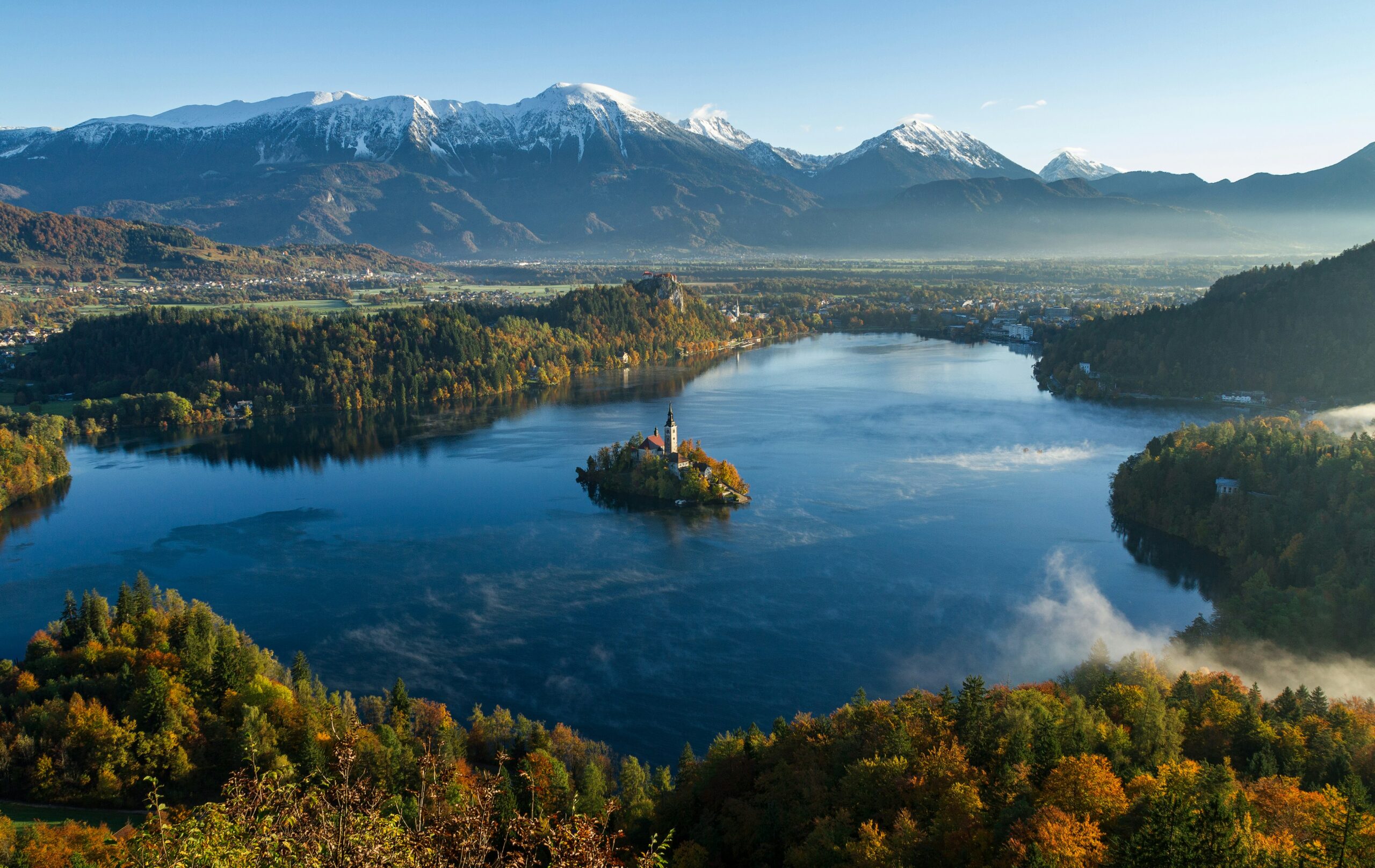
Begin, as most people do, at Lake Bled, where a tiny island church sits in impossibly turquoise water beneath a cliffside castle, and you’d be forgiven for thinking you’d wandered into an overworked postcard. Give it a moment past the crowds at dawn and it earns every bit of its reputation. But Bled is really just the opening act. Ljubljana, the capital, might be the most livable small city in Europe: a green, pedestrianised core threaded by the Ljubljanica River, Hapsburg architecture painted in soft pastels, and a dragon on every bridge because local legend insists Jason himself slew one here on his way home with the Golden Fleece.
Beyond the capital, the Julian Alps offer hiking and by winter, skiing, that rivals anything in the better known ranges next door, minus the queues. The Soča Valley runs an almost improbable shade of emerald green, a river so clear it looks digitally enhanced. Head south and the landscape shifts entirely into karst country, where the Škocjan Caves plunge into some of the largest known underground canyons on the planet. And then there’s the coast, barely forty seven kilometres of it, but enough to fit in Piran, a Venetian gothic town so photogenic it feels almost unfair to the rest of the Adriatic.
Culture, Lightly Worn
Slovenian culture doesn’t perform for visitors, which is exactly its charm. This is a country of roughly two million people who nonetheless produced one of literature’s great cultural obsessions: more books published per capita than almost anywhere in Europe, and a national holiday, Prešeren Day, dedicated to a poet. Café culture runs deep, unhurried, closer in spirit to Vienna than to anywhere Mediterranean. Wine matters enormously and quietly, with small family estates in Goriška Brda and the Vipava Valley producing whites that sommeliers now talk about the way they once spoke of Friuli. Beekeeping, extraordinarily, is something of a national pastime. Slovenia has more beekeepers per capita than any other country, and the Carniolan grey bee, native to these hills, is protected almost as a point of civic pride.
Food follows the terrain rather than any single tradition. Alpine dishes lean towards dumplings and cured meats, the coast turns to olive oil and seafood, and the interior borrows from Austro-Hungarian and Balkan influences in roughly equal measure. Ask a Slovenian about their grandmother’s štruklji and watch how quickly the conversation turns personal.
An Environment Built on Restraint
What sets Slovenia apart, and what makes it worth discussing in the same breath as regeneration rather than mere sustainability, is how much of the country has simply been left alone, deliberately. More than sixty percent of Slovenia is forest, one of the highest proportions in Europe, and roughly forty percent of its land carries some form of protected status, including Triglav National Park, the country’s only national park and a genuine wilderness by Central European standards. Brown bears, lynx and wolves still roam here in numbers most of Western Europe lost centuries ago.
That isn’t an accident of geography so much as a policy choice, made consistently over decades. Slovenia was the first country in the world to be officially declared a Green Destination at a national level, certified by the Global Sustainable Tourism Council’s Green Destinations programme back in 2016, and it has spent the years since building an entire national tourism strategy, the Slovenia Green scheme, around measurable environmental performance rather than marketing language. Individual destinations, hotels and even attractions can be certified under the same framework, which means a traveller can actually verify what’s being claimed rather than take a brochure’s word for it.
Ljubljana itself offers one of the clearest examples. In 2016 it became the first European capital named a European Green Capital, having banned private cars from its historic centre years earlier and converted the reclaimed street space into pedestrian zones and riverside cafés. Its waste management system now diverts the vast majority of household waste away from landfill, a genuinely rare achievement for a European capital.
Regeneration, properly understood, isn’t only about carbon counting. It’s about whether a place leaves its land, water and communities better off for having been visited, and Slovenia’s approach reflects that instinct almost everywhere you look: farm stays that funnel income directly back into rural villages otherwise facing depopulation, fishing and foraging traditions actively protected rather than merely tolerated, and a deliberate strategy to disperse visitors beyond Bled and Ljubljana into the Alps, the wine regions and the karst interior, so that tourism revenue doesn’t concentrate in two or three overwhelmed spots while the rest of the country empties out.
It amounts to a rare thing: a country that got there first, and quietly, without needing anyone to notice. Which, in the end, might be the most Slovenian thing about it.

Best Time to Travel in Slovenia
The highlighted months represent the best time to travel to this destination, based on average weather, tourist traffic and seasonal travel data from market research.
Read about Slovenia
- Regenerative, Travel

- Cultural, Travel
- Regenerative, Travel