Meera Dattani is executive editor of Adventure.com and an award-winning freelance travel journalist who's been at it for nearly twenty years, writing for the likes of Condé Nast Traveller, National Geographic Traveller, BBC Travel and the i paper. London-born with Ugandan-Indian heritage, she's known for stories on food and cultural heritage, wildlife and conservation, and soft adventure, often told through a lens that pushes back on old, tired ways of covering travel. She also founded TravelWritingWebinars and previously chaired the British Guild of Travel Writers.
Meera Dattani
Beyond employment numbers: What genuine community benefit actually looks like in East African lodges
Statistics, press releases and impact reports can tell us a lot about how lodges are investing in local people, but what’s the real-world, real-time effect on individuals in that community?
For too long, ‘Africa’ has been a canvas for the traveller: For their epic moments, starring in their own wildlife documentary on a tried-and-tested diet of two games drives a day, bush breakfasts and G&T sundowners. But in recent decades especially, the dial has been shifting, fast.
The epic moments remain, of course, but there’s greater focus on people, from staff working in tourism to the communities who live on the edges of nature. But in this murky, often-greenwashed world of community-based tourism and its gold standard cousin of community-led tourism, what does ‘effective’ look like if the aim is t both empower and give agency?
The first thing a private-sector company can do for any community is create economic development, says Praveen Moman. A Ugandan Asian exiled from Uganda in 1972, he returned to found Volcanoes Safaris, specialising in primate safaris through its lodges in Uganda and Rwanda. “It’s what the private sector should be good at and what we try to do, sometimes in difficult circumstances,” he says. “Around 85 to 90% of our staff come from the area. That’s income going directly to them and their families.”
Key Facts: List example
- Volcanoes Safaris' Gahinga Batwa Village, built in 2017, now houses around 150 resettled Batwa people near Mgahinga National Park in Uganda.
- Borana Lodge commissioned a SAPA (Social Assessment for Protected and Conserved Areas) survey to test its assumptions about what the local Maasai community actually valued.
- Sarara's elephant numbers in Namunyak Conservancy have grown from roughly 400 to around 6,000 since the conservancy began in 1995.
- Sarara's Milk to Market programme has 22 boda boda drivers collecting goat's milk from 1,250 Samburu women across 21 villages to feed orphaned elephants at Reteti Sanctuary.
2. Volcanoes Safari in Uganda
Mount Gahinga Lodge, near Mgahinga National Park, the country’s smallest in southwestern Uganda, was Volcanoes’ first property and home to one of their leading initiatives, the Gahinga Batwa Village. Walking distance from the lodge, its purpose was to resettle the forest-dwelling Batwa people, evicted from Mgahinga during the early 1990s as governments expanded parks to protect endangered mountain gorillas. “They were marginalised,” says Moman. “They’re hunter-gatherers, had no steady income, and faced prejudice.”
Today, it’s a community of around 150 people, with houses, toilets and water tanks, managed by Volcanoes Safaris Partnership Trust(VSPT). “We built the Batwa Village in 2017. Eight years later, they’re growing crops, and kids who didn’t go to school are top in class,” says Moman. In fact, one of the most powerful indicators here is the success of (currently 62) Batwa children in mainstream primary education. While there’s no nearby secondary school, although that’s the aim, some children receive funding to continue their education at boarding school.
VSPT also worked with the community to create a Batwa Heritage Trail, a cultural heritage walk by the lodge to share knowledge of medicinal herbs, fire-making and forest life with visitors. Future plans include an on-site vocational centre, to showcase Batwa sewing, weaving and tailoring. “Moving from the current roadside centre will connect up the cultural heritage experience,” says VSPT coordinator Ronald Hagumimana, a former housekeeper at Mount Gahinga Lodge.
There’s community representation too; Jane Nyirangano is chairwoman of the Batwa village. “I talk to Batwa families and listen to their needs and challenges,” she says. “If there’s an important issue, I bring it to Ronald so he can discuss with the VSPT team. This helps us to have a voice and be involved in decisions.”
3. Community involvement at Borana Lodge
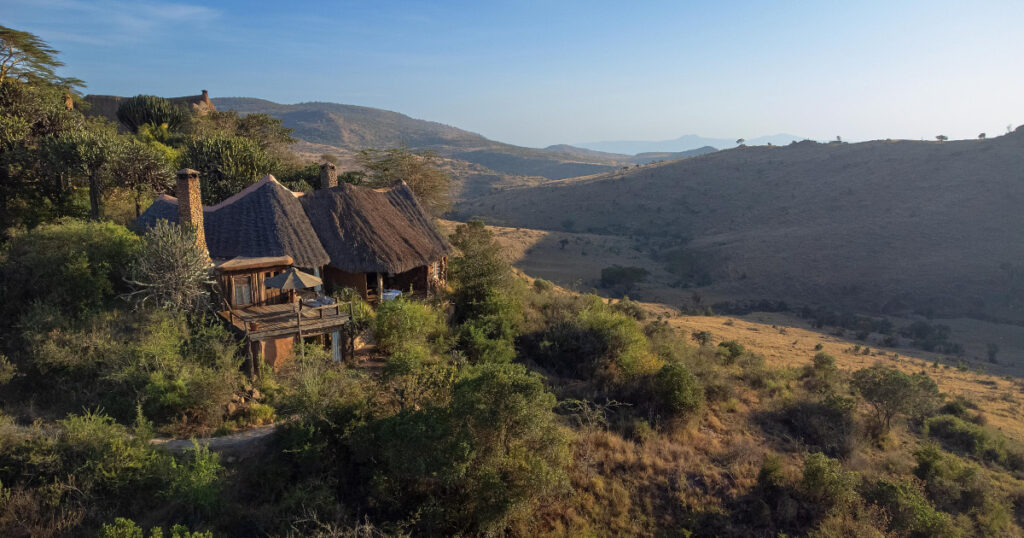
This deep-level engagement is also embedded into Borana Lodge run by third-generation Kenyans Michael and Nicky Dyer, who work with the local Maasai community. In the foothills of Mount Kenya overlooking Laikipia’s Samangua Valley, the property is a member of Long Run, a global organisation of nature-based tourism enterprises. “The gap has been getting a good, honest appraisal from the community as to what their needs are,” says Michael Dyer. “They’ve been marginalised by successive governments, almost deliberately, and no-one has a true sense of what they value.”
To address this, they commissioned a SAPA (Social Assessment for Protected and Conserved Areas) survey to challenge their own presumptions about what individuals in a community wanted. “Those priorities change over time,” says Dyer. “Initially, key issues were employment, access to grazing, security, education bursaries, and health.”
For a pastoralist community, access to year-round grazing is crucial, but land degradation had taken its toll. “200, 300 years ago, you had wildlife migration corridors, grazing was high-density, short duration, frequent moves, which made it very sustainable,” he says. “We’re trying to return to those ancient cultural practices.” One initiative is a for-profit, joint venture where community members lend their cattle to it; cattle offspring will belong to the company, then sold for profit. “The beef industry is growing massively here; and they will get dividends,” he says.
The Dyers hope such projects also help address issues around historical injustice and inequitable access to natural capital, as well as integrating the Maasai pastoralist system into the conventional financial sector. These ventures sit alongside conventional ones such as education programmes and mobile health clinics. They’re also looking at micro-enterprises where people can apply for funding and mentoring, to encourage more dynamic and equitable models. “A lot of donor funding that comes into this landscape is a two-year programme,” says Nicky Dyer, “But when donors walk away, they leave a community slightly floundering.”
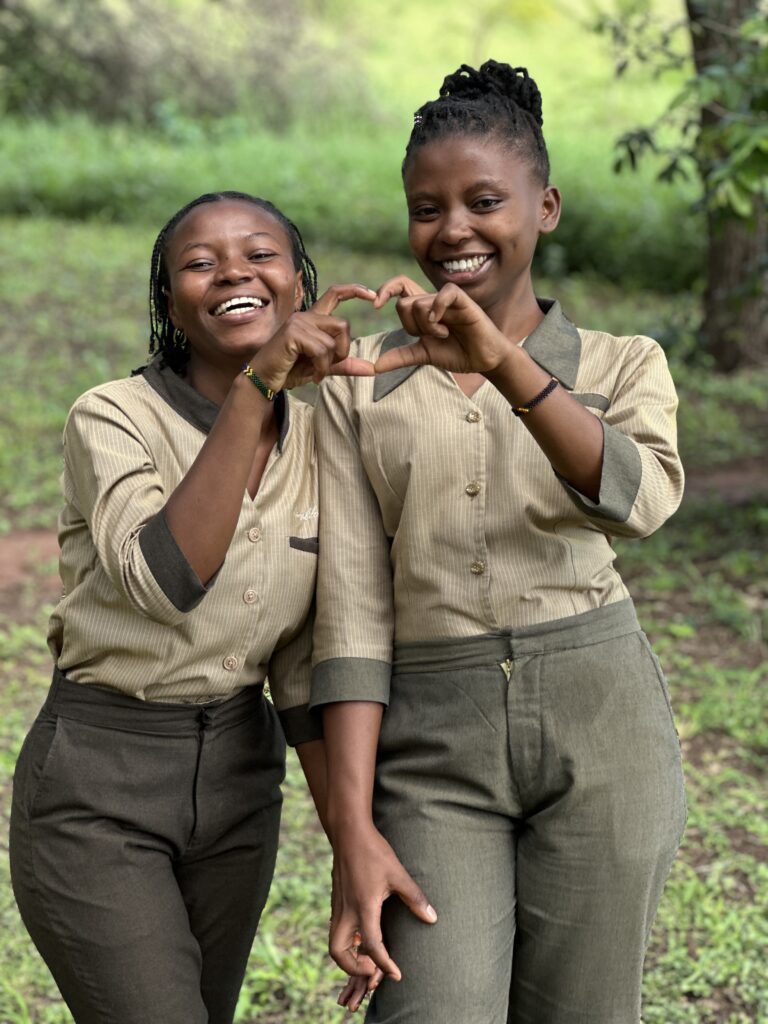
Employing, developing and promoting local people is another tangible action. “For local-local, we’re close to 90%. For local as in Kenya, we’re about 95%,” says Michael Dyer. “Our tourism operation is woman-led, as is our mobile clinic and horse-riding operations. All senior staff are Kenyan.”
In recent years, there’s been a rise in impact reports to measure such criteria and stay accountable. Tanzanian-led Kantabile Afrika, a boutique, owner‑run safari company which operates two low‑impact, ‘leave no trace’ camps in the Serengeti, produced their first impact report in 2025, covering environmental initiatives, inclusive employment strategies for women, and commitment to promoting Tanzanian identity.
With climate change disproportionately affecting the world’s most vulnerable communities, how tourism is done matters. Kantabile Africa’s camps have no pools, bathtubs or air-conditioning, instead using biophilic design approaches. They emphasise sharing the cultural diversity of Tanzania’s tribes, and visits to the nearby Kuria community are arranged in advance, respectfully.
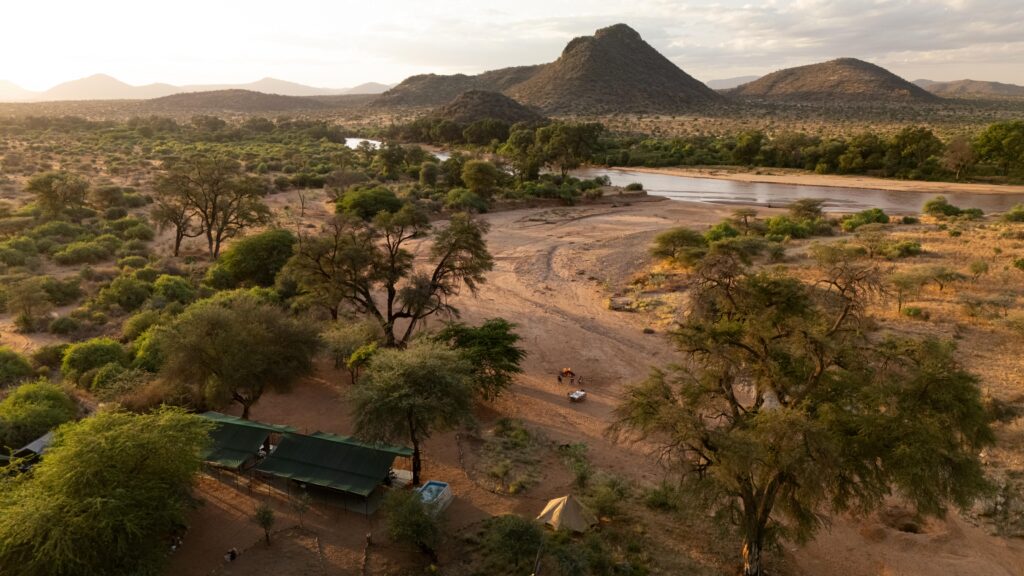
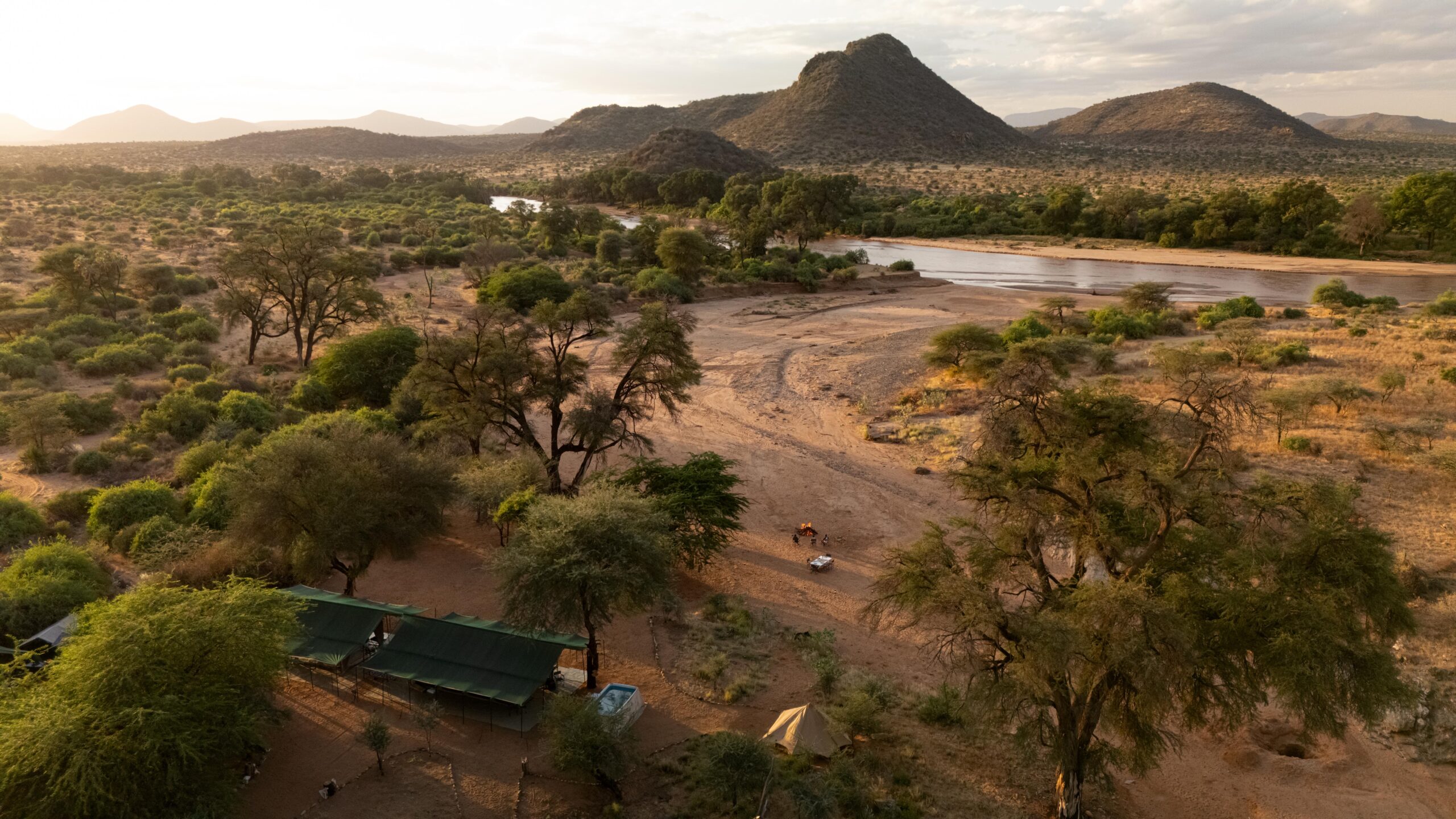
This community-first approach has also shaped Sarara in northern Kenya’s Namunyak Wildlife Conservancy, home to the Indigenous Samburu people. Sarara has four community-run camps across 1,000 acres, and a maximum capacity of 65 guests.
Sarara began just over 30 years ago in 1995 when around 1,200 local Samburu families decided to start a conservancy. They wanted to protect their ancestral lands and create sustainable lives, after some 20 years of illegal poaching that near-destroyed land and wildlife. Ironically, it was younger people who resisted, says Riekie Human, a writer and editor for Sarara’s community-led conservation initiative Sarara Foundation: “They were worried it would be like the national parks, that someone from big cities would come and take over their land.”
But the Sarara Foundation’s now-director of community Titus Letaapo spent three decades ensuring this wouldn’t be the case. The conservancy has a dual purpose; supporting economic growth and helping to rehabilitate the land. Elephant numbers had dwindled to 400; now there are around 6,000. Other successes include the Milk to Market Program in which Indigenous Samburu women, mostly with little or no prior economic independence, sell excess goats’ milk to another Sarara project, Reteti Elephant Sanctuarywhich rescues orphaned elephants.
“It turns out that goat’s milk is not only nutritious, but gentle on tummies,” says Human, “and elephants have particularly sensitive stomachs.” Now, 22 boda boda (motorbike) drivers collect milk from 1,250 women across 21 villages and take it to the sanctuary for pasteurisation before it’s fed to elephant. “It makes my reports more rewarding than saying, ‘We reached X people in medical camps’, which, even if it isn’t, can sound like greenwashing,” says Human.
Back in Uganda, Great Lakes Safaris, owned by Ugandans Amos and Amy Wekesa, operates six lodges near national parks and two hospitality training programmes through the Great Lakes Foundation. At Café Budongo Training and Conservation Centre in Budongo forest in Murchison Falls National Park and Café Kibale by the entrance to Kibale National Park, they offer free training to young adults, from food service to barista skills, enabling them to work in the tourism economy that surrounds them.
What’s clear is community-led tourism is about more than numbers; the power lies in hyper-local community-building and creating sustainable economic systems. As Volcanoes’ Moman says, we should be careful about ‘the community benefit’ story. “We should not think, ‘Oh, we’re wonderful, helping the poor’. You need communities as much as they need you.”
What makes any community tourism successful is its lasting impact. Is the initiative, be it training, education or housing, making a difference to and improving real people’s lives and prospects? And will it keep doing so, beyond the impact report for that quarter? If the answer is yes, that’s something to talk about.