Destination
Uganda
Why Uganda?
Culture and Indigenous Peoples
Uganda’s cultural map is dense even by African standards, home to more than fifty ethnic groups speaking over forty languages. The Baganda, the largest group, gave the country its name and still maintain a functioning traditional kingdom under the Kabaka, whose palace and cultural institutions in and around Kampala remain very much alive rather than ceremonial relics. Further west, the Banyankole and Batooro carry their own royal traditions, while the north tells a different story altogether, home to the Acholi, Langi and Karamojong, pastoralist and agrarian communities whose ways of life were badly disrupted by decades of conflict and are now, slowly, being rebuilt.
Then there’s the Batwa, sometimes called Uganda’s original forest people, who lived for millennia inside what is now Bwindi Impenetrable Forest and Mgahinga before conservation policy in the 1990s moved them out to protect gorilla habitat. It’s a complicated history, one Uganda has been trying to address more seriously in recent years through community tourism initiatives that give the Batwa a genuine stake, economically and culturally, in the forests they once called home. Visit one of the better run community walks near Bwindi now and you’ll hear that history told plainly, without polish, by people who lived it.
Daily life across Uganda still runs on matoke, the green banana that forms the staple of most meals, alongside groundnut stews and grilled tilapia from Lake Victoria. Music and dance remain central to how communities mark everything from harvests to funerals, and hospitality here has a warmth that visitors tend to mention before almost anything else, a kind of unforced generosity that has as much to do with culture as with the fact that tourism, done well, has started to matter economically to a lot of ordinary Ugandan families.
Landscape, Environment and Wildlife
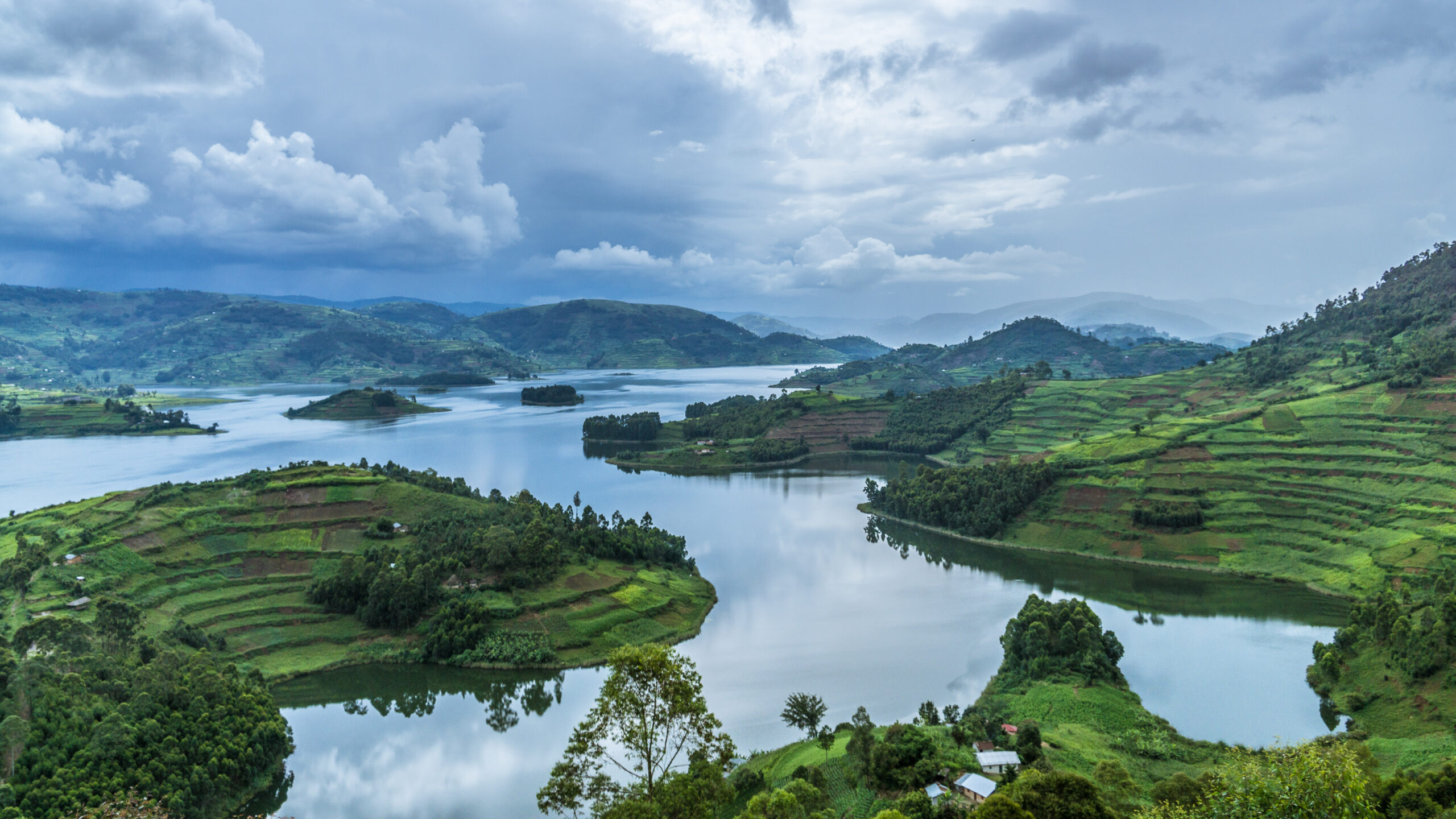
Geographically, Uganda is almost absurdly varied for its size. The Rwenzori Mountains, the fabled Mountains of the Moon, hold glaciers within a few degrees of the equator, an increasingly rare and fragile sight as climate change eats into the ice. The Albertine Rift running along the western border creates a dramatic landscape of volcanic peaks, deep crater lakes and some of the richest biodiversity in Africa, a direct result of the rift’s varied altitude and ancient forest cover. Lake Victoria, Africa’s largest lake, anchors the south, while the Nile begins its long journey north from Jinja, close to where it thunders over the rapids and falls that have made this stretch of river one of the continent’s best white water rafting destinations.
Murchison Falls, in the country’s north, might be Uganda’s single most dramatic sight: the entire Nile forced through a gap barely seven metres wide before crashing forty three metres down into a churning gorge. The savannahs around it hold lion, giraffe and enormous herds of buffalo and elephant, while the river itself is thick with hippo and some of the largest crocodiles left in Africa. Queen Elizabeth National Park, further south, adds tree climbing lions to the list, a genuinely rare behaviour found in only a handful of populations worldwide, alongside Kazinga Channel’s dense concentrations of hippo and birdlife that make it one of the best birding destinations anywhere on the continent, with over a thousand species recorded across the country.
What Makes the Wildlife Special
What sets Uganda apart isn’t simply the volume of wildlife, impressive as that is, but the sheer range of habitat packed into one country. Within a few hours’ drive you can move from open savannah to dense montane rainforest to Afro alpine moorland above the treeline, and the wildlife shifts accordingly. Few countries let you track lion on the plains one morning and primates in the forest canopy the next, and fewer still can claim, as Uganda can, to be a serious contender for the best birding on the continent, home to shoebill storks, the enormous, faintly prehistoric wading bird that has become something of a pilgrimage sighting for serious birders willing to pole through the papyrus swamps of Mabamba Bay to find one.
The Gorillas and Chimpanzees
But it’s the primates that define Uganda’s reputation, and rightly so. Bwindi Impenetrable Forest, a genuinely ancient rainforest thick with vines and moss, is home to roughly half the world’s remaining mountain gorillas, a population that has grown steadily in recent decades thanks to one of conservation’s clearer success stories. Strict permit systems limit the number of visitors allowed to trek each day, and a significant share of permit revenue flows directly back into surrounding communities, funding schools, clinics and infrastructure in villages that once had every incentive to see the forest cleared rather than protected. The trek itself is genuinely demanding, hours through steep, tangled terrain, but the reward, sitting a few metres from a silverback and his family group going about their entirely unbothered daily business, tends to leave even seasoned travellers quietly stunned.
Kibale Forest, further north, offers a different but equally compelling encounter: the highest density of primates anywhere in Africa, including well habituated chimpanzee communities that researchers have followed for decades. Watching a chimp troop move through the canopy, calling to each other across the forest in that unmistakable, almost unsettlingly human rhythm, is its own kind of revelation, a reminder of just how closely we’re related to what we’re watching.
The Country Itself
Kampala, the capital, doesn’t get nearly enough credit. Built across seven hills, chaotic, hilly and genuinely warm in temperament, it has a nightlife and food scene that surprises most first time visitors, along with the Kasubi Tombs, the burial site of Buganda kings and a UNESCO World Heritage Site that speaks to a much older Uganda than the one most safari itineraries touch. Jinja, a couple of hours east, has become something of an adventure hub, built around the Nile’s white water and a slower riverside pace that makes a good counterpoint to time spent in the parks.
What ties all of it together, the gorillas, the birds, the kingdoms, the rift valley lakes, is a country that has had to fight harder than most of its neighbours for its conservation successes, recovering from civil conflict and instability that at various points threatened to undo decades of protection work. That it has come out the other side with mountain gorilla numbers rising, tree climbing lions intact and a tourism model that genuinely channels money back into the communities living alongside the wildlife says something about the seriousness with which Uganda has approached the whole project. It isn’t the loudest country in East Africa. It might, quietly, be doing the most interesting work.

Best Time to Travel in Uganda
Read about Uganda
- Regenerative, Travel

- Community, Regenerative