Culture and Indigenous People
South Africa calls itself the Rainbow Nation for good reason, home to eleven official languages and a population shaped by Khoisan indigenous heritage, Bantu migration, Dutch and British colonialism, Indian indentured labour, and decades of apartheid that both divided the country brutally and, in resisting it, forged an extraordinarily resilient national culture. The Zulu and Xhosa are the largest cultural groups, their traditions, music and oral history still central to national identity, Nelson Mandela himself a Xhosa speaker whose own clan name, Madiba, is still how many South Africans refer to him with real affection.
The Khoisan peoples, San and Khoikhoi communities, represent southern Africa’s oldest inhabitants, their presence here stretching back tens of thousands of years, their rock art scattered across the Drakensberg and the Cederberg among the oldest continuous artistic traditions on Earth. Much of their history was violently disrupted by colonial expansion, and there’s been a slow, meaningful push in recent decades to recognise Khoisan heritage more fully, in land claims, in cultural institutions, in how the country tells its own origin story.
Cape Malay culture, descended from enslaved and exiled people brought from Southeast Asia under Dutch colonial rule, gave Cape Town its distinctive bright painted houses in the Bo Kaap and a cuisine built on fragrant curries, bobotie and koeksisters that remains one of the city’s genuine culinary signatures. Braais, the South African barbecue, function as something close to a national ritual regardless of background, a rare point of genuine cultural overlap in a country still working through the legacy of its divisions. Music carries enormous weight too, from Zulu isicathamiya harmonies made globally famous by Ladysmith Black Mambazo to the township jazz that scored the resistance movement and still shapes South African music today.
Landscape, Environment and Climate
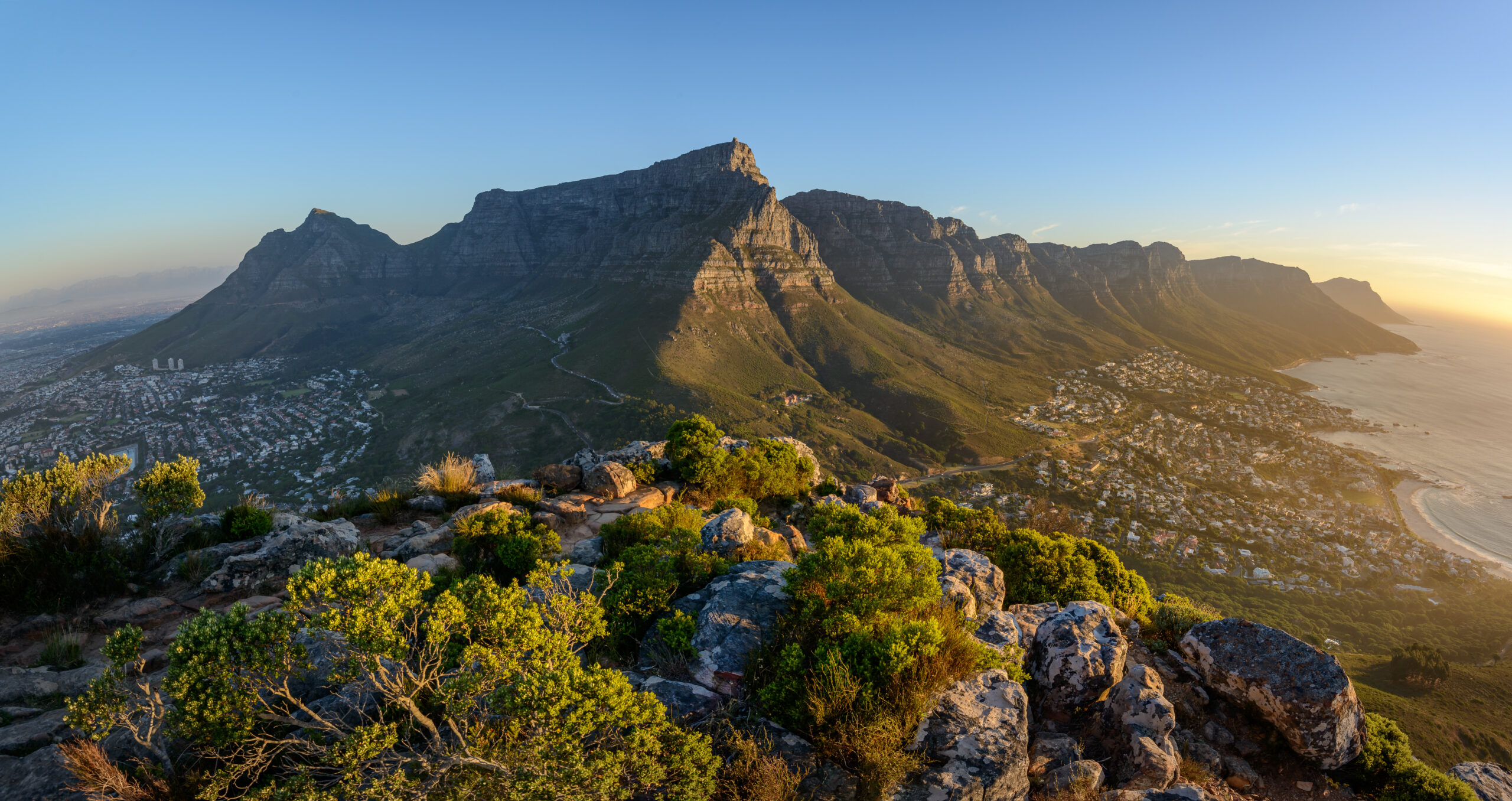
South Africa’s geography resists easy summary. The Cape region, around Cape Town, holds the Cape Floral Kingdom, the smallest but most biodiverse of the world’s six floral kingdoms, home to over nine thousand plant species, the majority found nowhere else on Earth, dominated by fynbos, a fire adapted shrubland that looks unassuming until you realise a single mountainside can hold more plant species than the entire United Kingdom. Table Mountain itself, flat topped and often wrapped in the cloud locals call the tablecloth, anchors the city in a way few urban landmarks anywhere manage.
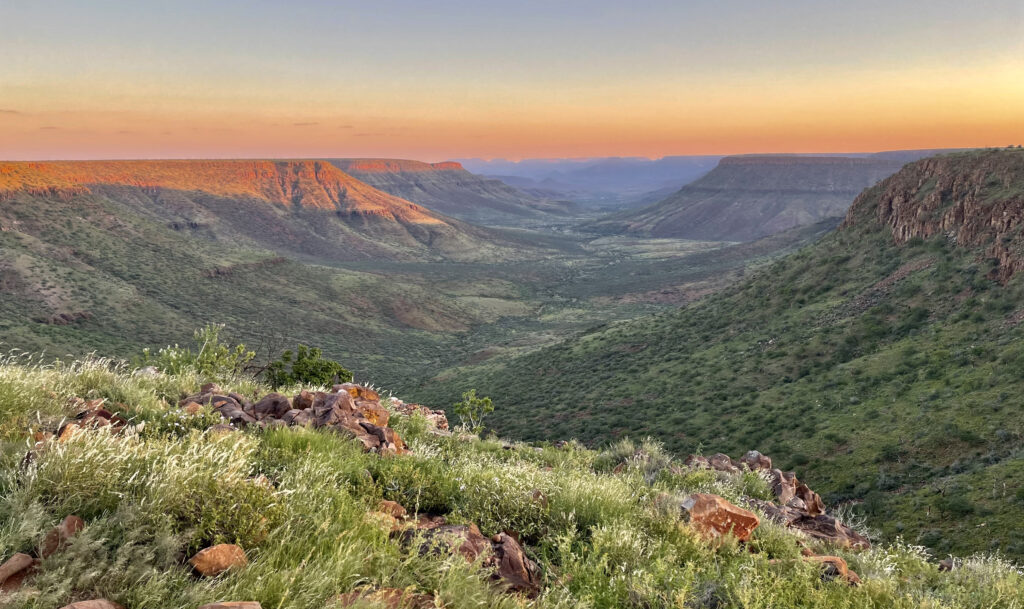
Move inland and the landscape shifts into the Karoo, a vast semi desert plateau of extraordinary stillness and some of the clearest night skies in the world, which is precisely why the country has become a serious hub for astro tourism and hosts major international radio telescope arrays. The Drakensberg range along the Lesotho border delivers proper alpine drama, jagged basalt peaks over three thousand metres, ancient San rock art hidden in its caves, and hiking that rivals anywhere in the world. Along the eastern coast, KwaZulu Natal turns subtropical, humid and green, giving way further north to the wetlands and estuaries of iSimangaliso, while the Garden Route, stretching along the southern coast, threads indigenous forest, lagoons and dramatic sea cliffs together in one of the most scenic drives on the continent.
Climate varies enormously by region and season, and crucially runs opposite to the northern hemisphere, South African summer falling between November and March. The Cape has a Mediterranean climate with winter rains, while most of the rest of the country follows a summer rainfall pattern, hot and green from November through March, dry and golden through the winter months of June to August, which is also peak wildlife viewing season in the bushveld.
Wildlife and What Makes It Special
South Africa offers something few African countries can, genuinely excellent Big Five wildlife viewing paired with world class infrastructure, meaning you can track lion and rhino in the morning and sleep in a properly comfortable lodge that night. Kruger National Park, one of Africa’s oldest and largest reserves, anchors this reputation, its self drive accessibility making world class safari genuinely achievable on a modest budget, a rarity on the continent. The private reserves bordering Kruger, Sabi Sands most famous among them, have built a reputation for some of the best leopard sightings anywhere in Africa, the cats here unusually habituated to vehicles after decades of careful, low impact guiding.
But South Africa’s wildlife story reaches well beyond the classic safari. The Cape’s marine environment is extraordinary in its own right, great white sharks patrolling False Bay, southern right whales calving close to shore around Hermanus each winter in a spectacle you can genuinely watch from the cliffs without a boat, and African penguins, an endangered species found only in southern Africa, nesting improbably among the granite boulders at Boulders Beach just outside Cape Town. Inland, the Karoo and the Kalahari hold their own specialists, black maned Kalahari lion, meerkat colonies, and some of the last significant populations of cheetah and African wild dog anywhere on the continent.
South Africa has also become a genuine world leader in rhino conservation, holding the largest population of both black and white rhino left on Earth despite having lost a devastating number to poaching over the past two decades. Private reserves and community conservancies have invested heavily in anti poaching technology, dehorning programmes and, increasingly, in giving neighbouring communities a direct financial stake in rhino survival, recognising that armed protection alone was never going to be enough.
Regenerative Tourism and Land Justice
This is where South Africa’s story becomes genuinely distinctive, because conservation here can’t be separated from the country’s land history. Apartheid era policy forcibly removed Black South Africans from vast areas of land, including much of what later became protected wilderness and private game reserves, and a meaningful part of the country’s regenerative tourism movement now centres on addressing that directly rather than working around it.
The Makuleke community’s land claim within Kruger National Park, settled in the late 1990s, returned ownership of a significant portion of the park’s northern section to the community that had been forcibly removed from it decades earlier, with tourism concessions in the area now generating income that flows straight back to Makuleke households, a model that’s been studied and partially replicated elsewhere in the country since. Grootbos, on the Cape’s whale coast, has built its entire operation around fynbos conservation and a foundation that trains young people from surrounding townships in horticulture, hospitality and conservation science, turning what was degraded farmland into one of the most biodiverse private reserves in the Cape Floral Kingdom.
Further afield, community owned lodges and conservancies bordering Kruger and in KwaZulu Natal have adopted models similar to those pioneered in Namibia and Kenya, land leased from local communities, employment and revenue flowing directly to them, and a growing recognition that rhino and elephant survival depends as much on the people living alongside them as on fencing and rangers. Cape Town, meanwhile, has invested seriously in water security since its near catastrophic Day Zero drought scare in 2018, and in restoring invasive tree clearing programmes that both protect scarce water catchment areas and create employment in surrounding communities.
None of this erases a genuinely complicated history, and South Africa doesn’t ask visitors to pretend otherwise. What it offers instead is a country actively, visibly working through that history rather than simply moving past it, land claims being settled, township tourism initiatives giving townships agency over how their own stories get told, and a conservation model slowly shifting from land taken to land shared. Few destinations anywhere carry quite this much weight and possibility in the same breath.