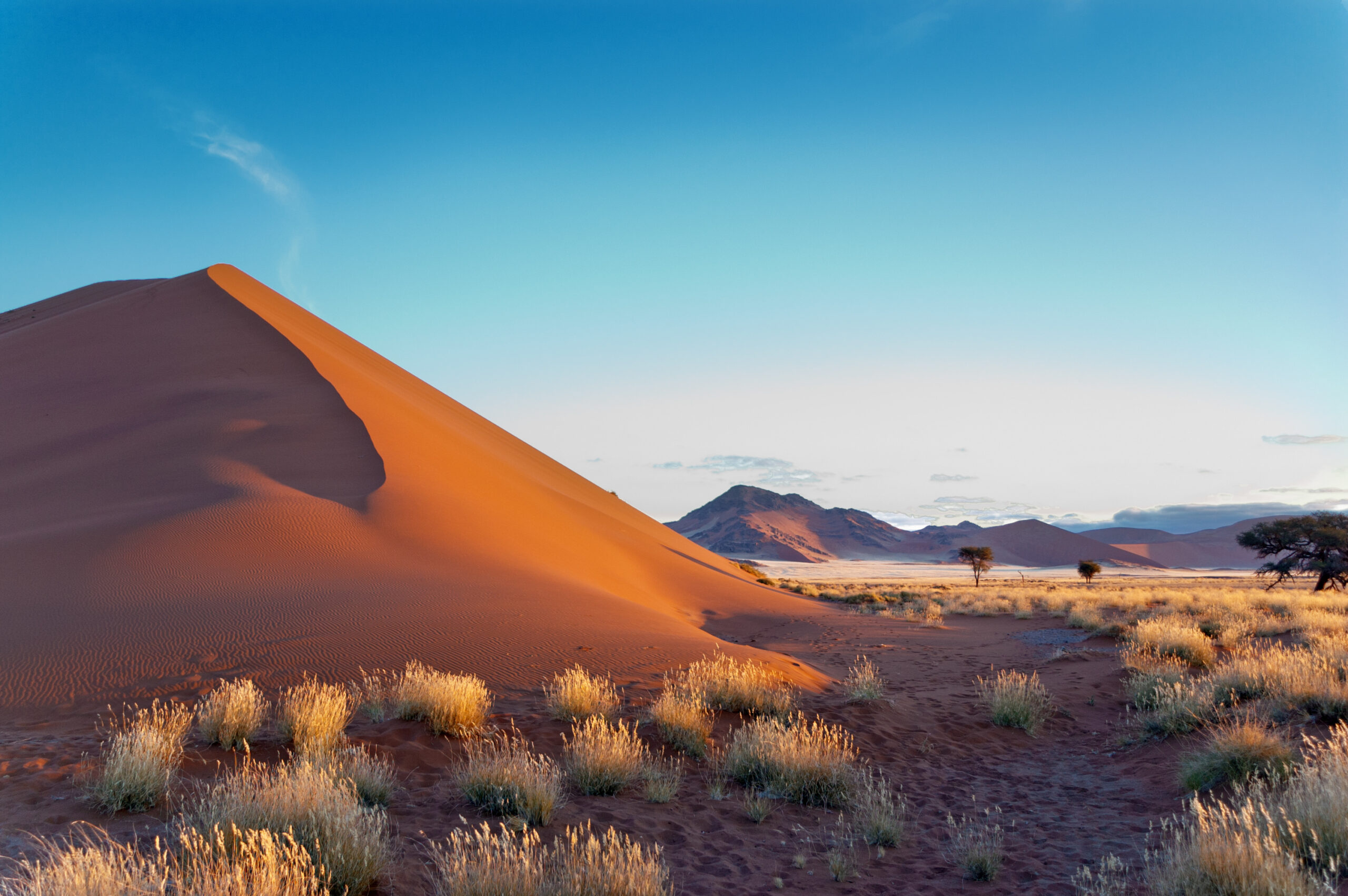
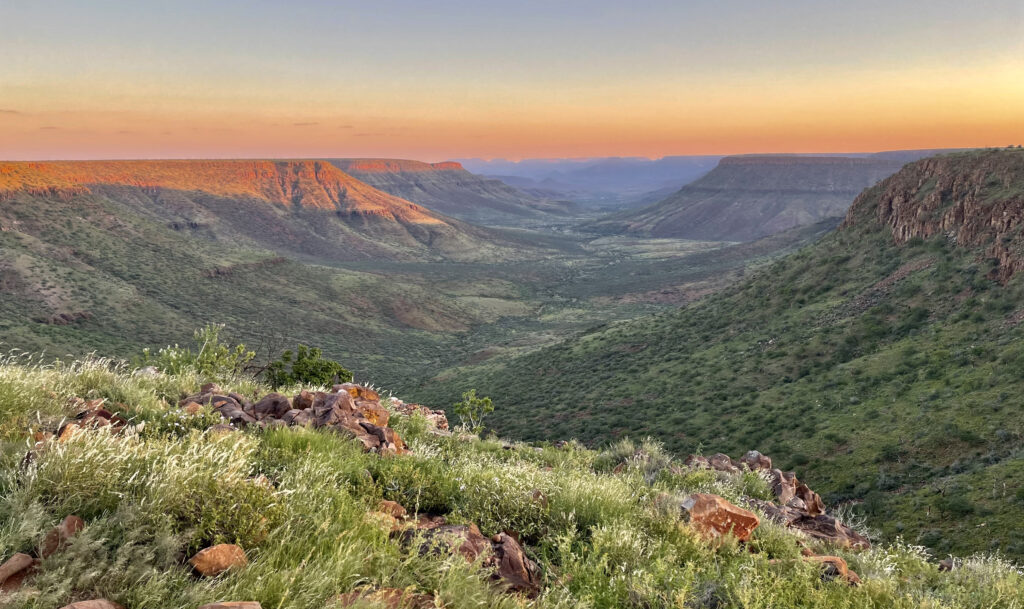
Start with the dunes, because everyone does, and they earn it. Sossusvlei’s great red dunes, some of the tallest on the planet, rise out of a pan so dry and cracked it looks lunar, with skeletal camel thorn trees standing dead in the clay for six hundred years or more, preserved by air too arid to rot them. Further north, the Skeleton Coast lives up to its grim old name, a fog bound stretch where the Namib meets the Atlantic in shipwrecks and seal colonies and almost nothing else, a coastline so remote and forbidding that early Portuguese sailors called it the Gates of Hell.
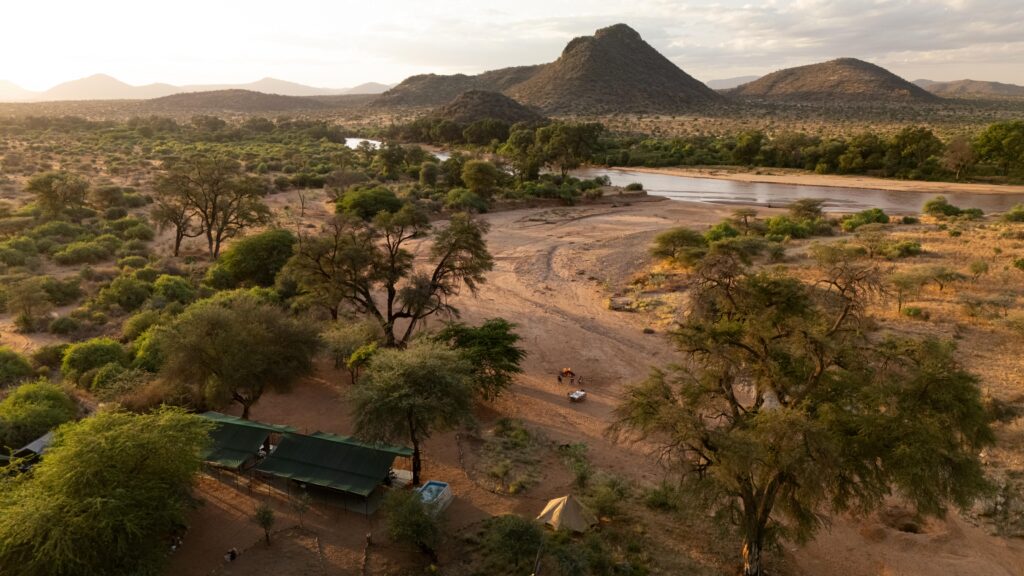
Etosha, in the country’s north, is one of Africa’s great game parks precisely because of how stark it is. A vast, shimmering salt pan draws elephant, lion, rhino and oryx to its waterholes in numbers that feel almost theatrical against the white backdrop. Damaraland, further west, offers something rarer still, desert adapted elephant and black rhino that have learned to survive on almost nothing, tracked on foot alongside some of the last community conservancy guides anywhere doing this work properly. And in the far northeast, the Zambezi Region, a thin green finger of Namibia reaching toward Zambia and Zimbabwe, feels like an entirely different country, all rivers and floodplains and hippo.
A Culture Shaped by Space
Namibian culture carries the marks of its geography and its history in equal measure. This is a young nation, independent only since 1990, home to a genuinely striking mix of peoples: Ovambo in the north, Herero and Himba further into the northwest, San communities whose ancestors have lived across this land for tens of thousands of years, and smaller populations of German, Afrikaner and Nama descent whose presence still shows up in the architecture of Swakopmund and Windhoek, oddly Bavarian towns dropped into the desert.
The Himba, semi nomadic pastoralists in the Kunene region, remain one of the last communities in Africa to maintain a traditional way of life largely on their own terms, their women famously covering themselves in otjize, a mixture of butterfat and ochre that protects skin from the sun and carries deep cultural meaning. The San, meanwhile, hold some of humanity’s oldest continuous cultural knowledge, their click languages and rock art, some of it thousands of years old, offering a direct line into how people first understood this landscape. None of this is performed for visitors so much as simply lived, which is precisely why encountering it feels different here than almost anywhere else on the continent.
Conservation as National Identity
If any country deserves to be held up as a genuine model for regenerative tourism, it might well be Namibia, and unusually, the achievement isn’t recent. Namibia became the first country in Africa to write environmental protection directly into its constitution at independence, and it followed that up with something even more consequential: a communal conservancy programme that handed control of wildlife, and the income from it, back to the rural communities living alongside it.
Today more than eighty communal conservancies cover roughly twenty percent of the country, land managed not by the state but by the people who actually live there, who decide how tourism and hunting concessions are run and who keep the revenue. The results speak plainly. Namibia now holds the largest free roaming population of black rhino left on the planet, along with the largest free roaming population of cheetah anywhere in the world, and its desert elephant and lion numbers have recovered steadily since the programme began, all of it happening largely outside formal national parks, on land where local communities have every incentive to protect wildlife because they’re the ones who benefit when it thrives.
It’s a model built on a genuinely simple idea, that conservation works best when the people who live closest to the wildlife have the most to gain from keeping it alive, and it has made Namibia something of a quiet reference point for conservationists well beyond its borders. Add to that a country that is already investing heavily in solar and wind power, and vast protected areas stitched together into one of the largest connected conservation landscapes in Africa, the KAZA Transfrontier Conservation Area, and you have a nation that never needed to reinvent regeneration. It simply built the whole country around it from the start.