
Destination
Portugal
Why Portugal?
Lisbon deserves its reputation, though perhaps not for the reasons most visitors assume. Yes, there’s the miradouros at golden hour, the tram rattling up impossible gradients, the fado drifting out of a tasca in Alfama at eleven at night. But the city’s real pull is its light, a particular quality that painters and photographers have chased for centuries and that still catches you off guard on an ordinary Tuesday afternoon. Porto, its northern rival, is grittier and arguably more handsome, all granite and tile stacked along the Douro, with port houses across the river in Vila Nova de Gaia that have been ageing wine in the same cellars since long before anyone thought to call it heritage tourism.
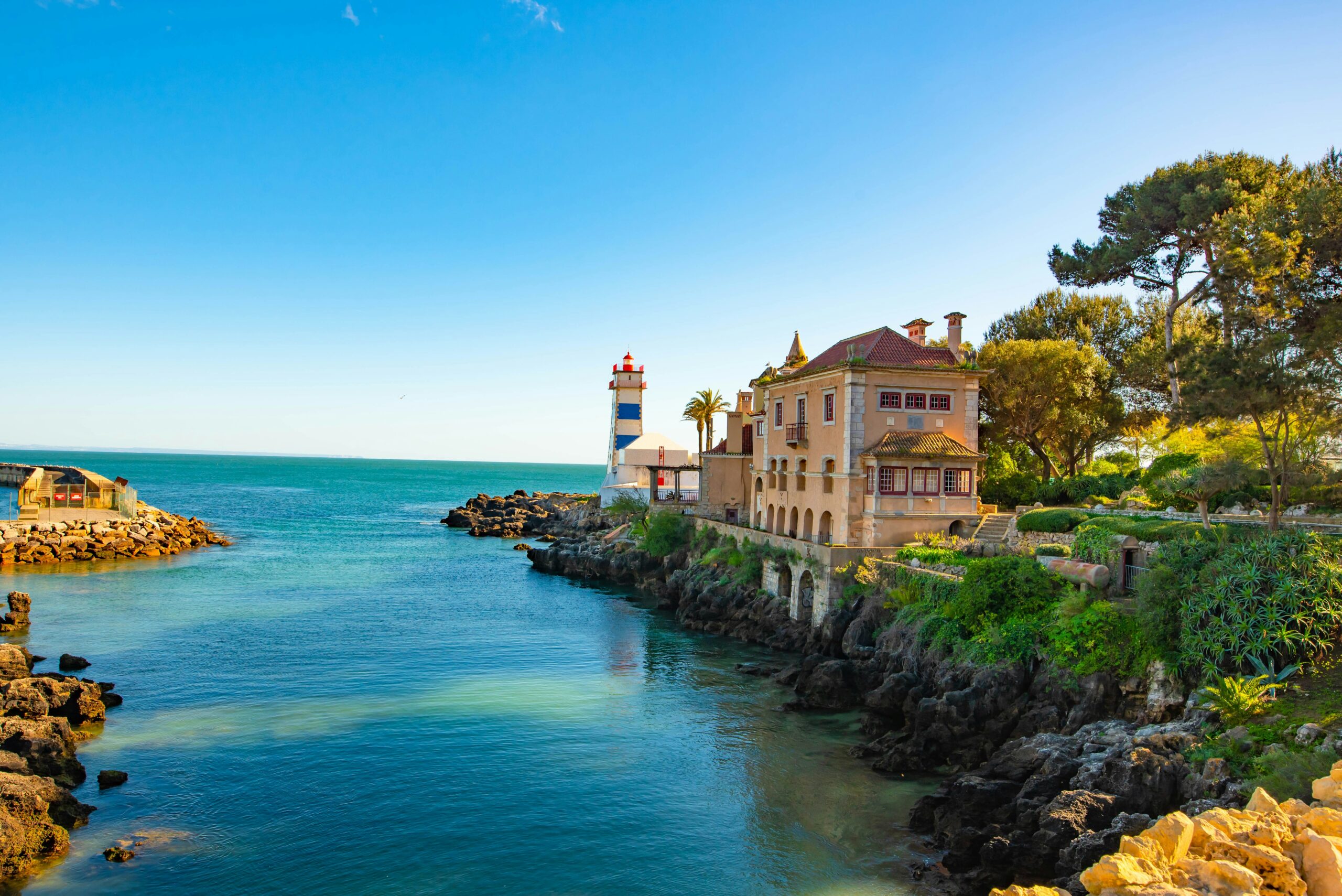
Beyond the two cities, Portugal opens up in ways that reward slowness. The Douro Valley itself, where those grapes are grown, is one of the oldest demarcated wine regions on earth, its terraced hillsides so steep and so ancient they read almost as sculpture. The Alentejo, a vast rolling interior of cork oaks and wheat fields, remains one of Europe’s least crowded regions despite being extraordinarily beautiful, closer in spirit and pace to rural Spain than to the coast an hour away. And then there’s the coastline itself, nearly 1,800 kilometres of it if you count the islands, from the surf breaks of Ericeira and Nazaré to the quieter coves of the Costa Vicentina, a stretch of Atlantic wilderness that somehow still feels undiscovered.
The Azores, out in the mid Atlantic, are their own separate proposition entirely: volcanic, green, thick with hydrangeas, and increasingly recognised as one of the best whale watching destinations in the world.
Culture Carried Gently
Portuguese culture doesn’t announce itself the way some of its Mediterranean neighbours do. Saudade, that peculiarly Portuguese ache of longing that has no clean English translation, runs through the national temperament and through fado, the melancholic music that grew out of the docks and backstreets of Lisbon and Coimbra. It’s a country built on a complicated maritime history, and that history still shapes everything from the architecture, all those manueline flourishes carved to look like ropes and coral, to the cuisine, which leans heavily on salt cod, a legacy of centuries spent at sea.
Food here rewards patience rather than spectacle. A proper Portuguese meal unfolds slowly: grilled sardines in summer, hearty stews of beans and cabbage in winter, extraordinary seafood almost everywhere within reach of the coast, and pastries that go far beyond the famous custard tart, though it would be a small crime to visit Belém and skip one. Wine culture runs deeper than most people realise too. This is a country with more indigenous grape varieties than almost anywhere else in Europe, many of them found nowhere else on the planet.
A Landscape Being Actively Rebuilt
What makes Portugal genuinely compelling from a regenerative standpoint isn’t simply what nature left behind, it’s what the country has chosen to do with land that decades of rural depopulation, wildfire and intensive agriculture had left in poor shape. The most striking example sits in the Alentejo, where a private initiative near Odemira has spent years buying up degraded farmland, much of it left barren by industrial eucalyptus plantations and overgrazing, and rewilding it back into cork oak woodland and native scrub. It’s the kind of long, unglamorous restoration work that takes decades to show results, and it’s already reversing desertification trends that had been quietly worsening across the interior for a generation.
Cork itself tells a broader story about how Portugal does sustainability almost by default. The country produces roughly half the world’s cork, harvested by hand from trees that are never felled, stripped only once every nine years in a process that has barely changed in centuries and that supports one of the most biodiverse woodland habitats in the Mediterranean basin, the montado, alongside Iberian lynx, black storks and Bonelli’s eagles.
Then there’s the sea. Portugal has committed to protecting thirty percent of its national waters by 2030, and the Azores now host one of the largest marine protected areas in the North Atlantic, a designation that came directly out of pressure from local fishing communities who saw depleted stocks and wanted something done before there was nothing left to protect. Lisbon, for its part, has pushed hard on urban regeneration too, expanding cycling infrastructure, overhauling public transport and setting itself a target of carbon neutrality by 2030, ambitious even by Northern European standards, let alone southern ones.
What ties all of this together, the rewilded farmland, the cork forests, the marine reserves, the low carbon cities, is a sense that Portugal has stopped treating its landscape as a backdrop for tourism and started treating tourism as one more tool for repairing that landscape. It’s not finished, and nobody pretends it is. But few countries on the edge of Europe are doing quite so much, quite so unshowily, to make sure the edge holds.

Best Time to Travel in Portugal
The highlighted months represent the best time to travel to this destination, based on average weather, tourist traffic and seasonal travel data from market research.

